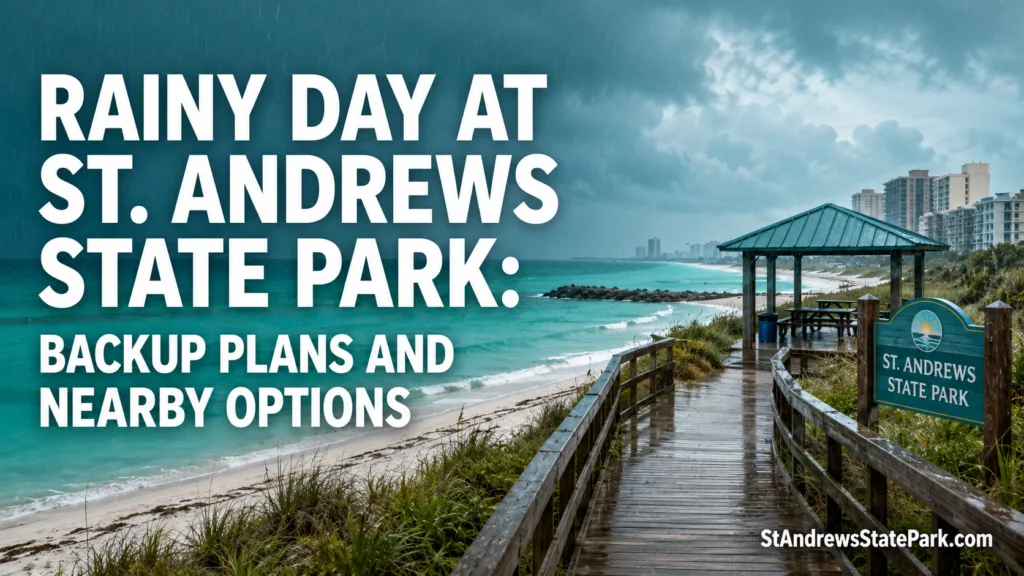
Rain at St. Andrews State Park can lead to two very different days. A brief coastal shower may leave enough time for a walk near Gator Lake, a slow drive through the park, or a return to the beach once the sky clears. Thunder changes the decision immediately. The park is built around shorelines, trails, overlooks, picnic areas, fishing access, and boat service, so it does not function like a destination with one large indoor building where everyone can wait.
The approved 2016 management plan describes 14 natural communities, three main public-use areas, and a campground spread across the mainland and Shell Island. It also describes the Gulf shoreline as a storm-influenced, changing coast, where waves and storms reshape beach and dune areas over time.[a] That layout explains why a rainy-day decision depends on the type of weather, not simply the amount of rain shown on a phone screen.
☔ The First Decision
Light rain without thunder may call for a short wait. Thunder, lightning, strong wind, or rough water calls for a move to a proper building or a fully enclosed hard-top vehicle. A picnic pavilion is useful for shade and ordinary rain, but it is not a lightning shelter.
| Weather Pattern | Stay in the Park? | Most Practical Move | Do Not Rely On |
|---|---|---|---|
| Brief shower, no thunder | Usually, for a short wait | Wait in the vehicle, then reassess overlooks or the paved road | A long trail while surfaces are wet |
| Steady rain for one to three hours | Only if the group is comfortable waiting | Choose one indoor Panama City Beach attraction | Moving repeatedly between pavilions and parking areas |
| Thunder or lightning | No open-air activity | Enter a substantial building or closed hard-top vehicle | Beach shelters, piers, jetties, boardwalks, or open pavilions |
| Strong wind or rough water | Land-based areas may still be limited | Move inland and use an indoor option | Ferry, paddling, pier, or jetty plans |
| Rain expected most of the day | Usually not worth forcing | Use a museum, movie, bowling, arcade, or indoor attraction | Assuming every short break will become a lasting clearing |
Read the Weather Before Changing the Day
A Passing Shower Without Thunder
A small rain cell can pass over the coast while brighter sky remains visible nearby. When there is no thunder, no sharp wind shift, and no worsening marine condition, waiting 15 to 20 minutes in the vehicle can make sense. Keep towels, phones, dry clothes, and children inside rather than trying to move the group under a succession of small shelters.
After that short wait, look again. Has the rain weakened? Is visibility improving? Are darker clouds still building over the Gulf or St. Andrews Bay? A rain icon covers a wide range of weather. The sound of thunder and the condition of the water tell you more about immediate safety than the icon alone.
Steady Rain With No Clear Break
Steady rain changes the value of the visit. The park’s main experiences are outdoors, and even a waterproof jacket does not solve wet benches, slick boardwalk approaches, soaked beach gear, limited visibility, or children who have already spent too long in the car. Once the visit becomes mostly waiting, an indoor backup usually gives the day more shape.
Thunder, Lightning, and Sudden Wind
⚡ Move Before the Storm Reaches the Beach
The National Weather Service advises people to stop outdoor activity when thunder is heard, move to a substantial building or a fully enclosed hard-top vehicle, and wait at least 30 minutes after the last thunder before going outside again. Small rain shelters and open structures do not provide proper lightning protection.[c]
At St. Andrews, that means leaving the beach, fishing piers, jetty rocks, overlooks, boardwalks, playground, and picnic pavilions. Do not stand near the water to watch the storm arrive. Coastal weather can close distance quickly, especially when wind begins pushing spray or sand across exposed areas.
What Still Works Inside St. Andrews State Park
Use the Vehicle as a Short Waiting Point
For a brief shower, a vehicle is the easiest place to keep the group dry and make a calm decision. Park fully in a marked space, close the windows, and avoid driving loops around the park just to pass time when rain reduces visibility. Set a reassessment time rather than waiting without a limit.
- Check whether thunder has occurred, even if the rain looks light.
- Look at the direction of darker clouds instead of only the current rainfall.
- Keep one dry towel and one dry layer of clothing available for each child.
- Decide whether the next move is a short park stop or a full indoor venue.
Use the Paved Road After the Shower
The park’s official amenities page lists a 2-mile paved road, two half-mile trails, Gator Lake and Buttonbush Marsh overlooks, elevated beach boardwalks, fishing piers, concessions, picnic areas, and campground facilities. The same page currently marks the visitor center exhibits and amphitheater as unavailable.[b]
That makes the paved road useful as a weather-window route, not as an all-weather attraction. Once rain stops and thunder is no longer a concern, drive between use areas and choose one short stop. There is little value in unloading the entire beach setup for a ten-minute clearing.
Check Gator Lake or Buttonbush Marsh Between Showers
Gator Lake and Buttonbush Marsh can work for a short wildlife stop after light rain. The management plan notes a great blue heron rookery visible from the Gator Lake overlook, while the park describes both areas as places to watch wading birds and waterfowl. Keep the stop short if another rain band is approaching, and treat wet decking, roots, and sandy edges with care.
Rain can sharpen bird calls and change where wildlife feeds, but it does not guarantee a sighting. Stay at the overlook, do not approach wildlife, and return to the vehicle before thunder reaches the area. Observe from the designed viewing point.
Treat the Gun Mounts as Short Outdoor Stops
Two World War II-era gun mounts remain in the park, including one near the jetty overlook. They add a historical stop to a cloudy visit, but they are not enclosed museum rooms and should not be treated as storm shelters. Visit only after conditions settle, then move on before another cell arrives.
Do Not Build the Day Around the Visitor Center
Older travel pages may still describe the Environmental Interpretive Center as a place with displays, maps, collections, and a saltwater aquarium. The current Florida State Parks amenities page lists the visitor center with exhibits as currently unavailable. Availability can change, so ask at the ranger station, but arrive with another rain plan already chosen.
The park stores and food service can help with snacks, drinks, basic supplies, tickets, or a brief pause. They do not replace a museum or a three-hour family activity. Useful, yes. An entire rainy afternoon, no.
When Leaving the Park Makes More Sense
The Weather Has Shifted From Rain to Storm
Leave exposed areas when thunder begins, wind rises sharply, or the water turns rough. A storm that affects the jetty or bay side may not look severe from a sheltered parking space at first. Do not wait for lightning to become visible. Hearing thunder is enough to end open-air activity.
Shell Island Is No Longer a Sound Option
Shell Island is an undeveloped barrier island, not a rainy-day escape. The official ferry information notes that the ride is about 15 minutes and that the island has no restrooms, shade, or food service.[d] Florida State Parks also states that the ferry is weather dependent.[b]
A light sprinkle at the dock may become a long, exposed wait on the island. When the forecast includes repeated storms, rough water, or strong wind, choose a land-based indoor option instead of trying to preserve the original boat plan.
The Group Is Spending More Energy Managing Rain Than Enjoying the Park
Wet towels, damp shoes, restless children, and repeated loading and unloading can turn a two-hour wait into the main event. The useful question is not, “Can we stay?” It is, “Will staying produce anything better than the indoor choice already available nearby?”
If the answer is no, leave before every indoor venue fills. Rainy periods push many beach visitors toward the same attractions at the same time.
Nearby Indoor Options by Time and Energy Level
Panama City Beach’s current official rainy-day listings include bowling, arcades, movies, indoor mini golf, WonderWorks, Ripley’s Believe It or Not!, Kartona, escape rooms, and the Man in the Sea Museum.[e] The better choice depends on how long the weather delay may last and how much energy the group has left.
| Indoor Option | Best Fit | Time It Can Fill | What to Know |
|---|---|---|---|
| WonderWorks | School-age children, teens, active families | About 3–4 hours | Highly interactive; rainy days can bring longer waits |
| Ripley’s Believe It or Not! | Families wanting visual exhibits and indoor entertainment | Flexible | Less physically demanding than a ropes-course style venue |
| Man in the Sea Museum | Visitors interested in diving, engineering, and local maritime history | About 1.5–2 hours | Includes indoor and outdoor exhibits; check operating days |
| The Grand Theatre | Tired families, couples, or groups needing a fixed block of dry time | One film | Easy choice when everyone needs to sit down |
| Rock’It Lanes or a large arcade | Children and teens who still need movement | Flexible | Food and activities in one building reduce extra driving |
| Pier Park | Mixed groups combining food, shopping, and a movie | Flexible | Many venues are indoors, but movement between them can be outdoors |
WonderWorks for a Long Weather Delay
WonderWorks suits a delay that is likely to last most of the afternoon. Its official information lists more than 100 interactive exhibits and suggests allowing at least three to four hours. It also warns that rainy days are among its busiest periods and notes that some exhibits involve flashing lights or motion.[f]
This is a strong choice for children who need more than passive viewing. Closed-toe shoes may be needed for certain activities, so changing out of wet sandals before arrival can save trouble.
Man in the Sea Museum for a Park-Connected Theme
The Man in the Sea Museum keeps the day connected to the coast through diving history, underwater habitats, equipment, and hands-on material. The museum recommends 1.5 to 2 hours for a self-guided visit and notes that the full experience includes both indoor and outdoor exhibits.[g]
Because it does not operate every day, check the current schedule before driving across Panama City Beach. It works well for visitors who want information and objects rather than loud, high-motion entertainment.
Movies, Bowling, and Arcades for Lower-Planning Days
A movie provides a fixed two- or three-hour block with little decision-making. Bowling and arcade venues work better when children have energy left and the group wants food, seating, and activity under one roof. Choose one place and stay there. Driving from one crowded venue to another rarely improves a wet afternoon.
Pier Park During Light or Intermittent Rain
Pier Park can combine a meal, shopping, and a movie, but it is not a fully enclosed mall. You may need to walk outdoors between buildings. It works better during light or intermittent rain than during wind-driven rain with standing water around walkways.
🎳 Match the Venue to the Group
- Young children: pick one venue with restrooms, food, and a clear two-hour activity.
- Teens: bowling, arcades, indoor karting, or WonderWorks usually holds attention longer.
- Adults seeking a quieter stop: choose the Man in the Sea Museum, a movie, or a long meal near the next planned stop.
- Mixed-age families: avoid venues that depend on every person meeting the same height, motion, or sensory requirements.
Rain Plans for Campers
Tent Campers
Before leaving the campsite, move bedding, electronics, paper goods, and spare clothing away from the tent floor. Close rainfly gaps, check that runoff is not being directed beneath the tent, and store loose items. Do not create drainage trenches or alter the campsite. Work with the site surface rather than cutting into it.
If thunder begins, a tent is not safe lightning shelter. Move to a substantial building or a fully enclosed hard-top vehicle. An open picnic cover may keep rain off a table, yet it does not provide the protection needed during a thunderstorm.
RV Campers
Bring awnings in before strong wind reaches the campground, secure chairs and light equipment, and keep children away from pooled water around utility areas. When conditions settle, check the site before extending outdoor equipment again. Fast setup can wait; damaged gear cannot be undone.
Campers Leaving for an Indoor Venue
Choose an attraction that matches the full weather window. A museum may cover two hours. WonderWorks, bowling, or a movie-plus-meal combination can cover much more. Keep dry clothes in the vehicle so the group does not carry wet beachwear into an air-conditioned building.
Rain Plans When Traveling With a Dog
Florida State Parks permits pets in designated areas, but St. Andrews does not allow them on the beach, wetlands, boardwalks, playground, or inside buildings. Pets must remain on a 6-foot leash and may not be left unattended. That makes many indoor backups difficult for visitors who brought a dog.
Do not leave a pet in a parked vehicle while visiting a museum, movie, or arcade. Return to pet-friendly lodging, divide the group only when the animal remains with a responsible adult, or use another safe arrangement already confirmed before the trip. A dog in the car is not a rain plan.
Choices That Usually Do Not Work Well
- Waiting under a picnic pavilion during lightning: it may block rain, but it is still an open structure.
- Walking onto a pier or jetty to watch the storm: these are exposed locations beside open water.
- Assuming the visitor center will provide indoor space: the official park page currently lists the exhibits as unavailable.
- Using Shell Island as the backup: the island has no shade, food, or restrooms and requires boat access.
- Returning outdoors as soon as rain stops: use the last sound of thunder, not the final raindrop, to start the 30-minute wait.
- Treating Pier Park as one enclosed building: several transitions between venues remain outdoors.
- Choosing three small activities instead of one suitable venue: rainy-day traffic, parking, and wet clothing make each transfer slower.
Sources and Verification
- [a] St. Andrews State Park Approved Management Plan — Covers the park’s land-use layout, natural communities, wildlife viewing areas, and storm-shaped beach and dune setting. It is reliable because it is the state-approved Florida Department of Environmental Protection planning document.
- [b] Florida State Parks Experiences and Amenities — Lists the paved road, trails, overlooks, visitor center status, concessions, pet limits, camping services, and weather-dependent ferry note. It is reliable because Florida State Parks manages the park and publishes its operating information.
- [c] National Weather Service Lightning Safety — Explains safe shelter, unsafe open rain structures, and the 30-minute waiting rule. It is reliable because the National Weather Service is the federal weather and warning authority.
- [d] Official Shell Island Ferry Information — Gives the ferry route, approximate ride time, landing details, and the lack of shade, food, and restrooms on Shell Island. It is reliable for service details because it is published by the park concession operator.
- [e] Visit Panama City Beach Rainy-Day Activities — Identifies current indoor choices such as movies, bowling, arcades, museums, and family attractions. It is reliable for destination listings because it is published by the Panama City Beach Convention and Visitors Bureau.
- [f] WonderWorks Panama City Beach Visitor FAQ — States the suggested visit length, exhibit count, rainy-day crowd pattern, access details, and motion or light cautions. It is reliable for venue details because it is the attraction’s official visitor page.
- [g] Man in the Sea Museum Visit Information — Lists the suggested tour length, indoor and outdoor exhibit mix, documentary, family features, and operating schedule. It is reliable because it is the museum’s official visitor information page.
Frequently Asked Questions
Can You Stay at St. Andrews State Park During Light Rain?
Yes, when there is no thunder, no dangerous wind, and no park restriction. A short shower may be worth waiting out in a vehicle. Most park experiences remain outdoors, so steady rain usually makes a nearby indoor venue more practical.
Are the Picnic Pavilions Safe During Lightning?
No. Open-sided pavilions and small rain shelters are not proper lightning shelters. Move to a substantial building or a fully enclosed hard-top vehicle and remain there for at least 30 minutes after the last thunder.
Is the St. Andrews State Park Visitor Center Open as a Rainy-Day Option?
The current Florida State Parks amenities page marks the visitor center exhibits as unavailable. Ask at the ranger station for same-day status, but do not make the visitor center your only backup plan.
Does the Shell Island Ferry Run When It Rains?
Ferry service is weather dependent, and schedules may change. Shell Island also has no shade, restrooms, or food service, so it is not a suitable backup when repeated storms or rough water are expected.
Which Indoor Option Works Best for Families?
WonderWorks suits active school-age children and can fill three to four hours. Ripley’s works for visual exhibits, while bowling and arcades suit children who need movement. A movie is easier when the group is tired.
What Is a Quieter Indoor Alternative Near the Park?
The Man in the Sea Museum is a quieter, information-focused choice built around diving history and underwater technology. Allow about 1.5 to 2 hours and check its current operating days before leaving the park.
What Should Campers Do When Thunder Starts?
Tent campers should move to a substantial building or fully enclosed hard-top vehicle. RV campers should bring in awnings and secure loose outdoor gear before strong wind arrives. Open picnic covers do not provide lightning protection.
What Changes When Visiting With a Dog?
Pets are not allowed on the beach, wetlands, boardwalks, playground, or inside park buildings. Most indoor attractions also cannot accommodate pets, so arrange a safe pet-friendly alternative rather than leaving the animal in a parked vehicle.