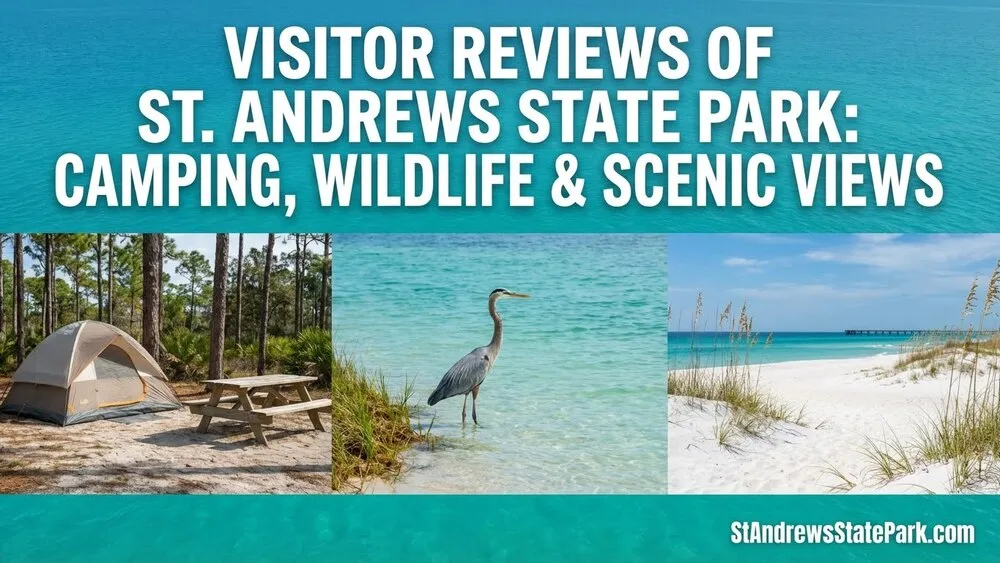
Visitor feedback about St. Andrews State Park tends to repeat the same themes: white-sand beaches, clear water, the protected jetty area, Shell Island access and a quieter natural setting than the more developed beachfront nearby. Reviews also repeatedly mention practical issues such as busy parking areas, lines at the entrance on popular days, wind around the jetty and the need to arrive prepared.
🎟️ Official fee and payment baseline: St. Andrews State Park currently charges $8 per vehicle with two to eight people, $4 for a single-occupant vehicle, and $2 for pedestrians, bicyclists, extra passengers and passengers in a vehicle with an Annual Individual Entrance Pass holder. Credit and debit cards are accepted. If a cash drop box is being used, exact change is required.[a]
Recurring Positive Themes In Visitor Reviews
Rather than assigning an unsupported percentage to positive reviews, it is more useful to look at the subjects that appear repeatedly. These patterns describe visitor experience; operating rules, fees and safety information should still come from official park sources.
- Clear Water And The Protected Jetty Side: Visitors frequently describe the protected swimming area near the jetty as clear, shallow and calmer than the exposed Gulf side. That does not make water conditions automatically safe. Tide, wind, surf and currents can change, so beach flags and current conditions still matter.
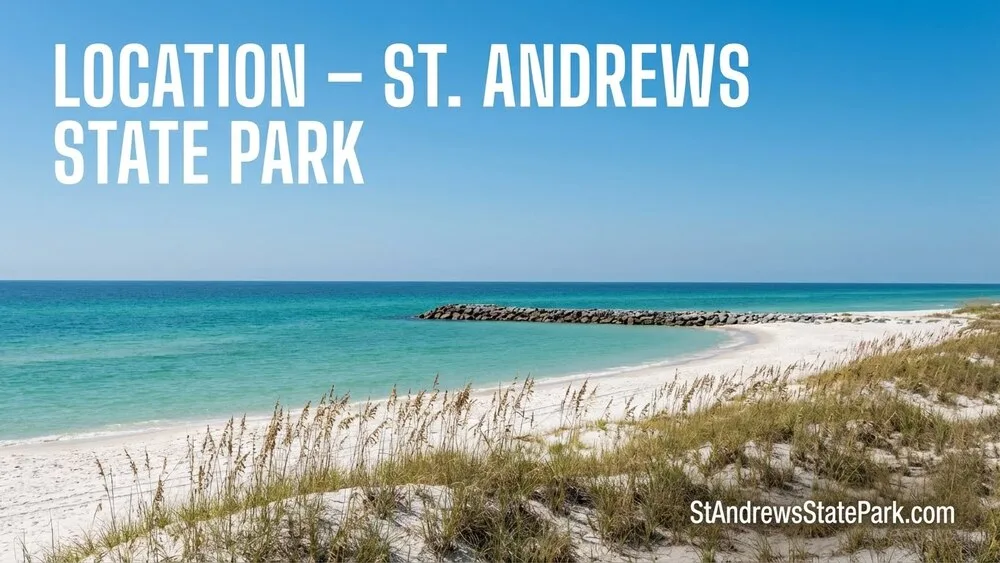
- White-Sand Beaches: The light-colored sand and Gulf shoreline are among the most repeated visual highlights in visitor comments. Florida State Parks currently lists more than 1.5 miles of white-sand beach within the park.[b]
- Natural Setting: Many visitors value the dunes, pine areas, lagoon shoreline, birds and other wildlife as much as the swimming areas. The park combines Gulf beach, bay and lagoon environments within the same property.
- Shell Island Access: The official Shell Island Shuttle and boat rentals make the undeveloped barrier island a frequent part of visitor plans. Shell Island is accessible only by boat from this area.[c]
- snorkeling And Marine Life Around The Jetties: Reviews often mention fish and other marine life around the rocks. Florida State Parks also identifies the jetty as a snorkeling and scuba-diving area.
- Useful Day-Use Facilities: Restrooms with changing areas, outdoor rinse showers, picnic facilities and concessions make longer beach visits easier. Current park information lists outdoor showers at each day-use parking area.[b]
Recurring Planning Issues In Reviews
Not every complaint reflects a fixed park rule. Some describe what a visitor encountered on one busy day. It is better to treat these comments as planning patterns rather than guaranteed conditions.
- Busy Entrances And Parking: Reviews commonly describe longer waits and heavier parking demand on summer weekends and holidays. There is no official rule that the park becomes full at a specific hour, so statements such as “you will not get in after 9 a.m.” should not be treated as fact. Arriving near the 8 a.m. opening time can simply give you more time and more parking options on busy days.
- Entrance Cost: Some reviewers mention the admission charge when comparing the park with free public beach access. The current fee is not “about $8 per person.” It is $8 for a vehicle carrying two to eight people, with different rates for single-occupant vehicles, pedestrians and bicyclists.[a]
- Wind Near The Jetty: Visitors sometimes find the jetty and Gulf-facing areas windier than expected. Umbrellas, loose towels and lightweight beach gear may need extra attention.
- Changing Marine Conditions: Jellyfish and other marine life can occasionally affect a beach day. Panama City Beach uses a purple beach flag for dangerous marine life, while yellow and red flags communicate stronger surf or current hazards.[d]
- Shell Island Costs: Some visitors consider ferry or pontoon-rental prices when deciding whether to add Shell Island to the day. These are separate concession services rather than part of the basic park admission fee.
What Reviews Suggest For A Smoother Visit
- Arrive Early On Busy Days: The park officially opens at 8 a.m.. Early arrival is a sensible choice for weekends, holidays and high-demand beach days, but there is no fixed official time at which capacity is guaranteed to fill.
- Consider A Weekday: Visitor comments often describe weekdays as less pressured than peak weekends, although weather, holidays and school schedules can change demand.
- Bring Beach Basics: Water, sunscreen, snacks, towels and a cooler can reduce the need to leave your beach area during the day. The park also has concession stores for food, drinks, ice and other supplies.
- Bring Snorkeling Gear Or Rent It: The jetties are one of the park’s better-known snorkeling areas. Equipment is available through park concessions when operating, or visitors can bring their own.
- Check The Beach Flags: Clear-looking water is not a substitute for checking current conditions. Green still means caution; yellow indicates moderate hazards; red indicates high hazards; and double red closes the water to the public.[d]
Paying The Entrance Fee
Visitor reviews are not the right source for current payment policy. Florida State Parks provides a clear answer: credit and debit cards are accepted. Cash can also be relevant when a cash drop box is in use, but the park requires exact change for that payment method.[a]
| Entry Type | Current Fee |
|---|---|
| Vehicle With 2–8 People | $8 |
| Single-Occupant Vehicle | $4 |
| Pedestrian Or Bicyclist | $2 |
| Credit / Debit Card | Accepted |
| Cash Drop Box | Exact change required |
Shell Island Comments And Collecting Rules
Shell Island comes up often in visitor feedback for walking, beach time, shelling and searching the sand. Florida State Parks does allow a narrow exception to its general no-collecting rule: visitors at coastal parks may keep empty seashells, sea glass and shark teeth found between the water line and the toe of the sand dunes.[e]
Live shells and live sand dollars should remain where they are. Other plants, animals, minerals, artifacts and natural materials generally may not be removed. That distinction is more useful than treating Shell Island as an unrestricted collecting area.
Who Tends To Enjoy The Park Most
- Families: The protected jetty-side swimming area is often shallower and calmer than the exposed Gulf shoreline. Adults should still watch children closely and check current water conditions.
- Nature-Focused Visitors: Dunes, coastal vegetation, birds, butterflies, lagoon habitat and Gulf shoreline provide more than a standard beach setting.
- Photographers: Beach, jetty, lagoon and wildlife settings provide several different subjects within one park.
- Snorkelers And Divers: The jetty rocks provide one of the park’s established areas for observing underwater life.
- Shell And Shark-Tooth Searchers: Empty shells, sea glass and shark teeth may be collected within the specific coastal-beach zone allowed by Florida State Parks rules.
When The Park May Be A Less Natural Fit
- Visitors who prefer arriving late on peak weekends and still expect the widest parking choice.
- Travelers looking primarily for nightlife, dense commercial development or a restaurant-lined beach immediately beside their chair.
- Visitors who need predictable water conditions. Surf, current, visibility and marine-life activity can change from day to day.
Current-status note: Temporary closures and service changes can occur after storms or maintenance work. Check the current Florida State Parks notice before traveling rather than relying on an older visitor review for operating status.
FAQ
How much does it currently cost to enter St. Andrews State Park?
The current day-use admission is $8 per vehicle for two to eight people, $4 for a single-occupant vehicle and $2 for pedestrians and bicyclists. Other fee categories also apply in specific situations.
Does St. Andrews State Park accept credit cards?
Yes. Florida State Parks states that credit and debit cards are accepted. If you use a cash drop box, exact change is required.
Does the park always fill up by 9 or 10 a.m.?
No fixed cutoff is published by Florida State Parks. Reviews sometimes describe heavy entrance and parking demand on summer weekends and holidays, so arriving near the 8 a.m. opening time may give you more flexibility on busy days.
Is the protected jetty swimming area safe for children?
The protected side is often shallower and calmer than the open Gulf, but that should not be treated as a safety guarantee. Tide, current, wind and beach-flag conditions can change. Adults should supervise children closely around the water.
Can visitors collect shells or shark teeth?
Florida State Parks allows visitors at coastal parks to keep empty seashells, sea glass and shark teeth found between the water line and the toe of the sand dunes. Live shells and live sand dollars should not be removed.
Sources
- [a] Florida State Parks — St. Andrews State Park Hours & Fees: Current entrance charges, credit/debit acceptance and exact-change rule for the cash drop box. (Official Florida State Parks source.) Hours & Fees
- [b] Florida State Parks — Experiences & Amenities: Current beach length, shower facilities, concessions, snorkeling, swimming and other visitor amenities. (Official Florida State Parks source.) Experiences & Amenities
- [c] Florida State Parks — Shell Island Adventures: Current Shell Island shuttle and park concession information. (Official Florida State Parks source.) Shell Island Adventures
- [d] Visit Panama City Beach — Beach Safety: Current beach-warning flag meanings and guidance that Gulf conditions can change. (Official Panama City Beach destination safety source.) Beach Safety
- [e] Florida State Parks — Frequently Asked Questions: Statewide rules on collecting natural materials and the exception for empty seashells, sea glass and shark teeth found within the specified coastal-beach zone. (Official Florida State Parks policy source.) Florida State Parks FAQ