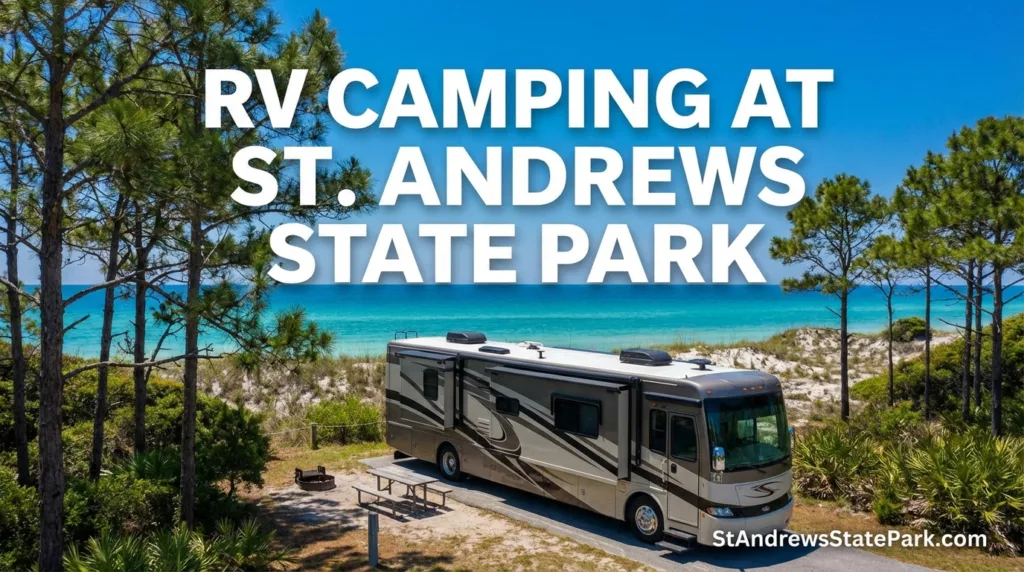
RV camping at St. Andrews State Park works for one simple reason: you get a real campground, not a paved overflow lot pretending to be a coastal stay. The campground sits along Lower Grand Lagoon, many sites lean into the water view, and the rest of the park stays close enough that the beach, jetties, boat ramp, trails, and concession stops feel tied into the same stay. That balance is rare on the Florida coast. Easy once you are set up. A little harder when you are trying to grab the dates you want.
What The RV Setup Looks Like
| Item | What You Should Use For Planning | Why It Matters |
|---|---|---|
| Hookups | Water, 30- and 50-amp electric, and sewer at each campsite [b] | This is a true full-hookup campground for current bookable sites. |
| RV Size | Camping units from tents to RVs up to 50 feet [b] | That makes the park workable for a wide range of trailers, fifth wheels, and motorhomes. |
| Campground Footprint | The approved plan lists 176 standard sites, 4 bathhouses, and 2 dump stations [c] | It is larger than many people expect from a beachside state park. |
| Current Price | $28 per night plus tax, plus a $6.70 reservation fee and a $7 nightly utility fee for RV stays [a] | You can price a stay accurately before booking. |
| Reservation Window | Florida residents: 11 months. Nonresidents: 10 months. New sites release daily at 8 a.m. Eastern [d] | The booking window is part of the trip, not an afterthought. |
Full hookups, lagoon-facing feel, long-range booking pressure—that is the mix here. Not flashy. Just very well suited to RV travel.
Why The Setting Works So Well
St. Andrews is not only a campground with beach access. It is a 1,260-acre park on a peninsula with more than 1.5 miles of shoreline, and the official park material ties that landscape to dunes, marshes, scrub, and pine flatwoods. That matters for RVers because the stay does not feel boxed in by asphalt and traffic. You are camping inside a park that still reads like a park. Not a roadside stop with a nice address. [f]
The campground itself is not out on the open Gulf sand. It sits on the lagoon side, which is a better fit for RV infrastructure and a calmer overnight feel. Florida State Parks also notes that most sites have a view of Lower Grand Lagoon. That one detail tells you a lot. You are not backing into a wall of palmettos and hoping the beach makes up for it later. The campsite has some scenery of its own.
The Park Around Your Site Is Part Of The Stay
From the campground, you are close to trails, beaches, a boat launch, concessions, the fishing pier, and the jetty area. The approved plan also places the park on the Great Florida Birding and Wildlife Trail and notes that the Gulf Pier extends more than 400 feet over the Gulf. So the RV stay here tends to feel layered: water access, wildlife viewing, shore fishing, snorkeling and scuba around the jetties, all inside the same park footprint.
One of the easiest mistakes with St. Andrews is thinking the campground is only a place to sleep. It is not. The campground sits inside one of the park’s most useful zones for exploring the rest of the property.
The Campground Is Bigger Than Many Beach Campers Assume
The 2016 approved management plan describes the campground along Grand Lagoon as two loops with 176 sites and 4 bathhouses. It also lists 2 dump stations and a group camp near Sandy Point. That is not a tiny coastal campground with a handful of premium pads. It is a large, established camping area with real internal infrastructure. For RV travelers, that changes the feel right away: more site choice, more room to work with, more of an actual campground rhythm. [c]
There is another layer here, too. The approved plan uses the older campground language tied to the Lagoon and Pine Grove loops. The current construction update uses West Loop and East Loop wording. A little confusing, yes. Useful to know, absolutely. If you compare old maps, old brochures, and current web pages, that naming shift can make the campground seem more mysterious than it really is. It is the same broad story: a multi-loop campground on the lagoon side, rebuilt and reopened in phases.
Use The Current RV Specs, Not The Old Ones
This is where older writeups tend to drift off course. The older official park brochure says the campground had 176 sites with electricity and water and could handle rigs up to 40 feet. The current amenities page says the sites now open for reservation have water, 30- and 50-amp electric, sewer hookups, and can fit RVs up to 50 feet. For planning a trip today, use the newer campground specs, not the older brochure numbers. [b]
What Changed?
- Older brochure language: 40-foot rigs, water and electricity.
- Current campground page: 50-foot rigs, water, 30/50 amp electric, and sewer.
- Current park update: campground work has moved through phased reopening, so the newer specs line up with a newer version of the campground.
That may sound like a small detail. It is not. A five-wheel owner or Class A driver reading a stale page could cross St. Andrews off the list for no good reason. Better to read the park like it is now.
Reservations Need Real Timing
The booking system is straightforward once you know the rhythm. Florida residents can reserve campsites up to 11 months ahead, nonresidents can reserve up to 10 months ahead, and new sites are released daily at 8 a.m. Eastern. That release time matters more than people expect at destination parks. If your travel dates are tied to peak weather, school breaks, long weekends, or a beach-heavy trip window, the safest move is to treat reservation morning as part of the plan. [d]
The cost structure is clear, too. The current camping fee is $28 per night plus tax, and RV reservations add the $7 nightly utility fee and the $6.70 nonrefundable reservation fee. That pricing still looks pretty good when you remember what you are getting: a state park setting, full hookups, water views at many sites, and direct access to one of the Florida Panhandle’s best-known outdoor parks. [a]
- Arriving after sunset? Call the park for the gate combination and instructions.
- Camping with a group? One responsible adult must remain on-site, and no one under 18 may camp alone.
- Bringing extra vehicles? Parking is limited and handled at staff discretion, with no more than two vehicles per campsite or cabin in the statewide reservation rules.
Pets, Site Use, And Small Rules That Matter
St. Andrews is friendly to RV travelers with pets, but the pet rules are not loose. Pets are welcome in the campground, though they are not allowed in swimming areas or buildings, and the park’s pet page also keeps them off the beach and other sensitive visitor areas. Keep the leash short, keep the site clean, and plan beach time knowing the pet will need a different part of the park. [d]
The statewide reservation rules also cap campsite occupancy at eight people or one immediate family, and the park asks late-arriving campers to call before the office closes. Those details sound ordinary. On the ground, they are the sort of details that keep check-in smooth instead of messy.
What The Current Campground Work Means
Florida State Parks says campground renovations have been moving through phased reopening, with reservations open for the West Loop and part of the East Loop while work continues on the remaining portions. The same update also mentions new picnic pavilions at the jetty area. For RV campers, the practical takeaway is simple: the park is operating and bookable, yet parts of the property are still being improved. That helps explain why older campground descriptions can feel out of date next to the current official site. [e]
The park’s public notice and planning documents also make it clear why site elevation, drainage, and utility work matter here. This is a lagoon-edge coastal campground, and official restoration records for campsite repairs reference flood zones and utility restoration work. Read another way, that postcard setting comes with real campground engineering behind it. That is part of the story at St. Andrews, and it is worth knowing.
Why This Campground Holds Its Place In The Park
St. Andrews recorded 1,011,837 visitors in fiscal year 2014/2015, and the approved plan estimated more than $88 million in direct economic impact, equal to 1,408 local jobs. Those are older planning figures, not current traffic counts, still they make one point very clearly: this park is not a side stop. It is a major outdoor destination. When the campground works well, it works inside a park that already carries serious recreational weight. [c]
That is why RV camping here feels more substantial than a simple beach reservation. You are camping beside the lagoon in a park known for beaches, birding, fishing, snorkeling, diving around the jetties, and day trips toward Shell Island. Some campgrounds give you a hook-up and send you elsewhere for the rest. St. Andrews does not need to do that.
References
- [a] Hours & Fees — supports the current camping price, utility fee, reservation fee, park hours, and after-sunset arrival instructions for campers. (Reliable because it is the official Florida State Parks page for this specific park.)
- [b] Experiences & Amenities — supports current RV-site hookups, 30/50 amp service, sewer, 50-foot maximum unit length, lagoon-view language, laundry, and campground proximity to park amenities. (Reliable because it is the current official amenity page published by Florida State Parks.)
- [c] St. Andrews State Park Approved Plan (2016) — supports the campground footprint, loop structure, bathhouses, dump stations, visitor and economic-impact figures, Gulf Pier length, and recreation context. (Reliable because it is an official Florida Department of Environmental Protection planning document.)
- [d] Reservation Information — supports the statewide reservation window, 8 a.m. Eastern release time, campsite occupancy rules, vehicle guidance, and pet-related camping rules used by Florida State Parks. (Reliable because it is the statewide official reservation policy page for the park system.)
- [e] Construction Projects Underway At St. Andrews — supports the phased campground reopening language, West Loop/East Loop wording, and current improvement work in the park. (Reliable because it is an official Florida State Parks park-update page.)
- [f] St. Andrews State Park Brochure — supports the park acreage, shoreline length, natural communities, and older campground description used to compare past and current RV specs. (Reliable because it is an official Florida State Parks brochure, though older than the current amenities page.)
FAQ
Does St. Andrews State Park have full hookups for RVs?
Yes. The current official campground amenities page says each campsite has water, 30- and 50-amp electric, and sewer connections.
What Size RV Can Fit At St. Andrews State Park?
The current park amenities page says the campground can accommodate camping units ranging from tents to RVs up to 50 feet in length.
Is The Campground Right On The Gulf Beach?
No. The campground sits on the lagoon side of the park, with many sites looking toward Lower Grand Lagoon. Beaches, jetties, and other day-use areas are still close by inside the park.
How Far Ahead Should You Reserve?
Florida residents can reserve up to 11 months ahead, and nonresidents can reserve up to 10 months ahead. New sites release daily at 8 a.m. Eastern, so popular dates are best handled early.
Are Pets Allowed In The Campground?
Yes. Pets are allowed in the campground, but they are not allowed in swimming areas or buildings, and park rules also keep them off the beach and certain other sensitive visitor areas.
Is The Campground Still Being Improved?
Yes. Florida State Parks says campground work has moved through phased reopening, with opened sections available for reservations while work continues on remaining portions.