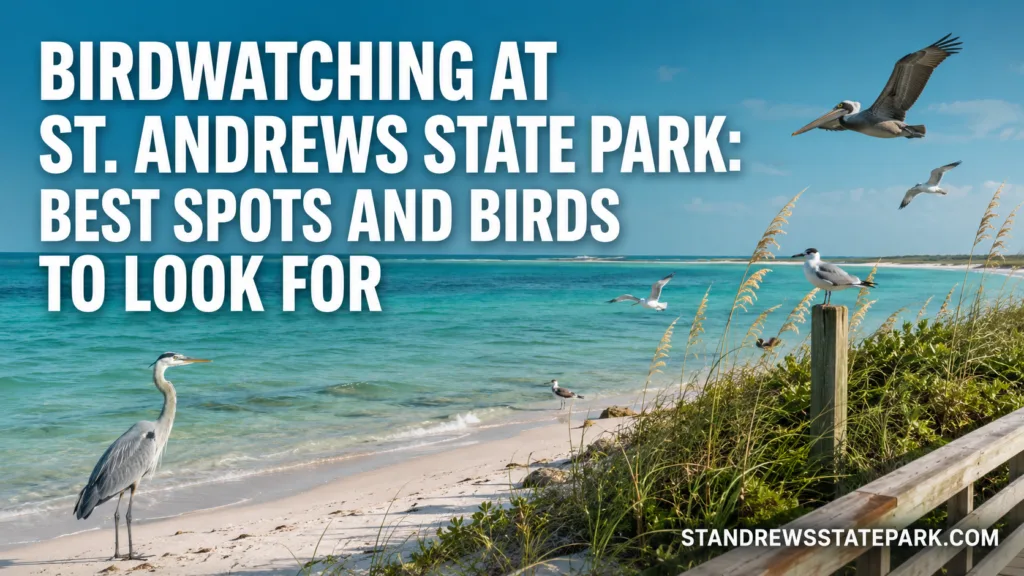
Birdwatching at St. Andrews State Park works because the park sits where several habitats meet: Gulf beach, Grand Lagoon shoreline, coastal dunes, pine flatwoods, marsh, scrub, and the barrier-island edge of Shell Island. You are not looking at one birding spot here. You are moving through a small coastal map where waders, shorebirds, raptors, terns, gulls, ducks, and migratory songbirds all use different corners of the same park.
The Florida Park Service describes St. Andrews as a migratory stopover for many bird and butterfly species, and that fits what you notice on the ground: birds are often not spread evenly. They gather where food, shelter, wind direction, tide line, and quiet edges line up.[a]
🪶 Best simple approach: start near Gator Lake for herons and freshwater-edge birds, check the Grand Lagoon side for pelicans and waders, then scan the beach and jetty area for gulls, terns, shorebirds, and raptors. If you visit Shell Island, give the upper beach and posted shorebird areas plenty of room.
Why St. Andrews Is Good For Birdwatching
The park’s birdlife comes from its layout. Grand Lagoon sits on one side, the Gulf of Mexico on the other, and the mainland trails pass through pockets of pine, scrub, marsh, and dune vegetation. That mix gives birds more choices: shallow feeding edges, open water, roosting posts, tree cover, exposed sand, wrack lines, and protected dune margins.
The park’s approved management plan notes that Shell Island is a 690-acre undeveloped barrier island with maritime hammock, coastal dune lake habitat, and broad beach dune areas. For birders, that matters. Barrier islands often work like rest stops on a long road: birds pause, feed, preen, and move again when the conditions feel right.[b]
St. Andrews also has more than pretty scenery. The management plan identifies habitat for birds such as least tern, snowy plover, Wilson’s plover, black skimmer, piping plover, reddish egret, little blue heron, tricolored heron, osprey, and great horned owl. Some may be seasonal, some are easier to see than others, and some depend heavily on quiet beach habitat.
Best Birdwatching Spots In The Park
Birding here is easier when you think by habitat, not just by parking area. A heron looking for fish does not want the same place as a plover feeding along wet sand. A raptor wants height. A tern wants open water and beach edges. Follow the habitat, and the bird list starts to make sense.
| Spot | What To Watch For | Why It Works |
|---|---|---|
| Gator Lake And Nearby Trail | Herons, egrets, ducks in cooler months, songbirds in vegetation | Freshwater edges, marsh plants, and quiet viewing angles |
| Buttonbush Marsh Area | Wading birds, rails by sound, small birds in cover | Dense wetland vegetation gives birds feeding and hiding space |
| Grand Lagoon Shoreline | Brown pelican, gulls, terns, osprey, herons | Protected water, docks, fish activity, and shallow shoreline |
| Jetty And Gulf Beach | Terns, gulls, shorebirds, pelicans, cormorants, raptors passing overhead | Open water, tide line, fish movement, and exposed resting areas |
| Shell Island | Shorebirds, terns, black skimmer, plovers, wintering and migrating birds | Undeveloped barrier-island habitat with beach dune and coastal lake edges |
| Pine And Scrub Edges | Woodpeckers, warblers during migration, flycatchers, raptors | Tree cover gives perches, insects, shade, and stopover shelter |
Gator Lake And The Freshwater Edge
Gator Lake is one of the easiest places to slow down and actually watch behavior. Scan the waterline first. Herons often stand so still they look like sticks in the marsh. Then check low branches, reeds, and open patches of water.
The park plan describes coastal dune lakes and freshwater areas as useful for birds, including little blue heron, green heron, reddish egret, American coot, ruddy duck, blue-winged teal, and northern pintail in the right season. Not every visit will produce all of them. Birding never works like a vending machine. Still, this is one of the better places in the park to look for freshwater and marsh-linked species.
Buttonbush Marsh Overlook
The Buttonbush Marsh area is quieter than the main beach scene and rewards patience. Look for movement in the lower vegetation, then listen. Marsh birds often give themselves away by sound before they step into view.
This is also a good place to practice careful scanning. Watch one small opening in the plants for a minute or two. A ripple, a flick of a tail, a small head turning sideways — that is often the whole clue.
Grand Lagoon Shoreline
Grand Lagoon is better for open-water and shoreline birds. Brown pelicans may pass low over the water, while gulls and terns often follow fish activity. Osprey can appear over the lagoon with that steady, searching flight that makes everyone stop talking for a second.
The lagoon side also gives you calmer water than the open Gulf on many days. That makes it easier to spot diving birds, perched birds, and waders working the shallows.
The Jetty And Gulf Beach
The jetty and Gulf-facing beach are classic coastal birding areas. Check the rocks, the surf line, and the wet sand left by receding waves. Shorebirds feed quickly here, picking at tiny prey in the sand as if they are reading invisible writing.
This zone can be bright, windy, and busy, so a small pair of binoculars helps. Look for terns hovering or diving, gulls resting in groups, pelicans cruising the surf, and small shorebirds moving along the edge of the water.
Shell Island
Shell Island is the place many birders think about first, especially for shorebirds. It has long open beach, dune habitat, and quieter edges than the busiest mainland areas. The park plan also notes that Shell Island supports wintering and nesting use by shorebirds, including snowy plovers in certain areas.
The rule here is simple: watch from a distance. If birds walk away, call repeatedly, crouch, flutter, or lift off, you are too close. Back up. A better view is not worth pushing birds off a feeding or resting area.
Birds To Look For
The bird list changes with season, tide, wind, and luck. Still, several groups are worth knowing before you go.
🪽 Shorebirds
- Snowy plover
- Wilson’s plover
- Piping plover
- Sandpipers and other small beach birds
🌊 Seabirds And Water Birds
- Brown pelican
- Gulls
- Least tern
- Sandwich tern
- Black skimmer
🌿 Wading Birds
- Reddish egret
- Little blue heron
- Green heron
- Tricolored heron
- Great egret and snowy egret
🦅 Raptors And Perching Birds
- Osprey
- Great horned owl
- Merlin during migration or cooler months
- Woodpeckers and migratory songbirds in wooded edges
When Bird Activity Is Best
Early morning is usually the cleanest window for birding. The light is softer, the air is cooler, and birds often feed before heat and foot traffic rise. Late afternoon can also be good, especially around the lagoon, marsh, and beach edges.
Season matters, too. Spring and fall migration can bring passing songbirds and shorebirds. Winter can be strong for plovers, ducks, and other birds using the Panhandle coast outside their breeding range. Summer is better for nesting-beach awareness; birds may be present, but your distance matters more than ever.
| Season | Birding Focus | Where To Look |
|---|---|---|
| Spring | Migration, nesting activity, terns, shorebirds | Beach edges, Shell Island, wooded pockets |
| Summer | Least terns, plovers, skimmers, wading birds | Only from respectful distance near posted beach habitat |
| Fall | Migrating shorebirds and songbirds | Jetty, Gulf beach, scrub and pine edges |
| Winter | Piping plover, red knot possibility, ducks, gulls, raptors | Shell Island, beach swash zone, Gator Lake, lagoon shoreline |
How Tides Change The Birding
On the beach, tide changes can matter as much as the clock. A falling tide exposes wet sand and small feeding zones. A high tide can push shorebirds into tighter resting groups. Around rocks, passes, and open-water edges, moving water can also concentrate fish — and fish bring pelicans, terns, gulls, and osprey.
Do not rush the first scan. Stop, look across the whole area, then work slowly from near to far. Many beach birds blend into sand so well that they seem to appear only after your eyes settle.
Birding Etiquette Near Shorebirds
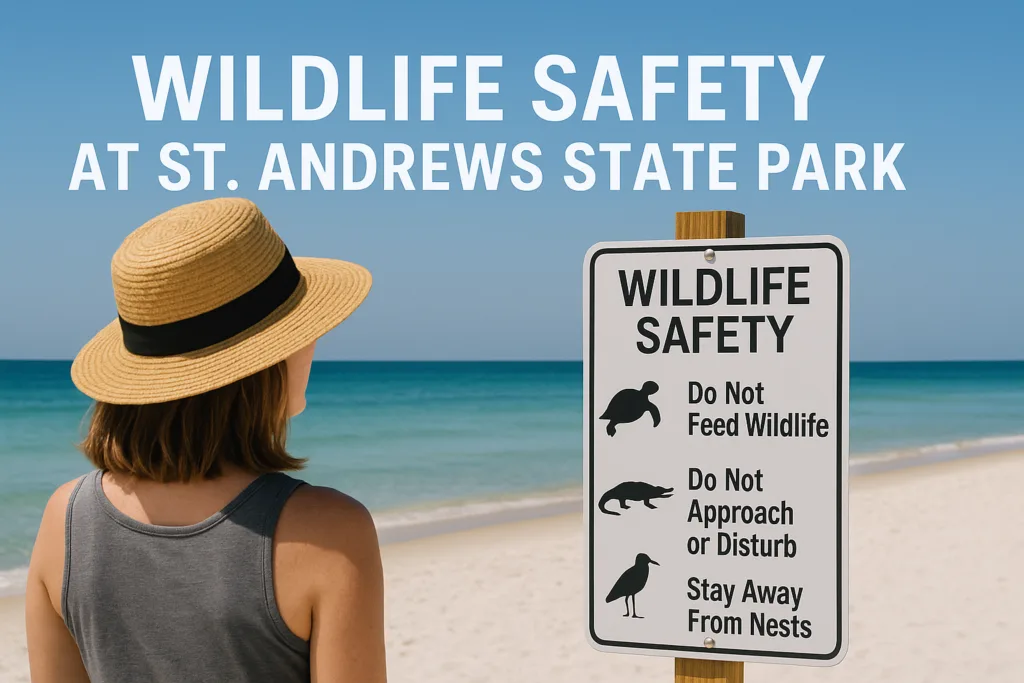
St. Andrews has beach habitat used by sensitive shorebirds, and that makes careful viewing part of the experience. The Florida Fish and Wildlife Conservation Commission gives clear advice for beach-nesting birds: stay out of posted areas, keep pets away from nesting areas, dispose of trash properly, avoid flying kites near nesting birds, and back away when birds act disturbed.[c]
⚠️ Beach bird rule: if a bird changes its behavior because of you, the distance is too close. Step back and let the bird return to feeding, resting, or watching its chicks.
This is especially important for plovers, terns, and skimmers. Chicks can be hard to see, and adults may leave eggs or young exposed when they are repeatedly disturbed. Quiet viewing protects the birds and gives you better behavior to watch. Everyone wins.
A Note On Shorebird Conservation At St. Andrews
The park is not just a casual birding location. Its management plan describes active monitoring for nesting shorebirds such as snowy plover, Wilson’s plover, American oystercatcher, least tern, and black skimmer. It also notes that surveys track nesting attempts, nesting adults, nest fate, predation sources, and annual productivity.
There is also practical conservation work behind the scenes. In a Florida Fish and Wildlife Conservation Commission update, volunteers at St. Andrews helped build 15 chick shelters for threatened shorebirds; these shelters provide cover for flightless chicks from predators and heat, and they were made using recycled materials such as salvaged PVC and old plastic signs.[d]
That detail says a lot. The beach may look simple from a towel or boardwalk. For a small shorebird chick, it is a wide-open world with very little shade.
Using The Great Florida Birding And Wildlife Trail
St. Andrews is listed by the Great Florida Birding and Wildlife Trail, a statewide network of more than 500 wildlife viewing sites. The listing also points birders toward eBird reports for St. Andrews, which can help you see what has been reported recently before you visit.[e]
That does not mean you should chase every report. Birds move. Weather changes. A rare sighting from yesterday can become empty sand today. Use recent reports as a clue, not a promise.
What To Bring For Better Viewing
- Binoculars: 8x or 10x binoculars are enough for most beach, lagoon, and marsh viewing.
- Sun protection: beach birding can mean long stretches with little shade.
- A small notebook or birding app: useful for noting location, behavior, tide, and time.
- Closed-toe shoes for trails: helpful around pine, scrub, and sandy paths.
- Patience: not gear, exactly, but it finds more birds than rushing does.
Common Birding Mistakes To Avoid
Most missed birds are not really missed because they were rare. They were missed because the person moved too fast.
- Only checking the beach: Gator Lake, marsh edges, pine cover, and the lagoon can be just as productive.
- Ignoring the wrack line: seaweed and natural debris can attract small prey, which brings feeding shorebirds.
- Walking straight at birds: approach at an angle, stop often, and keep distance.
- Looking only at big birds: tiny plovers and sandpipers often sit low and still.
- Forgetting the sky: osprey, pelicans, and passing raptors may appear overhead with little warning.
Birds By Habitat
Here is a cleaner way to think about the park while you are walking. Match the bird to the place.
| Habitat | Likely Bird Groups | Good Viewing Habit |
|---|---|---|
| Wet beach and swash zone | Plovers, sandpipers, gulls, terns | Scan low and slowly; birds blend into sand |
| Dune and upper beach | Snowy plover, Wilson’s plover, least tern, black skimmer | Stay outside posted areas and use binoculars |
| Lagoon and docks | Pelicans, gulls, terns, osprey, herons | Watch for fish movement and perched birds |
| Freshwater and marsh | Herons, egrets, ducks, coots | Look along edges, not just open water |
| Pine and scrub | Woodpeckers, warblers, flycatchers, owls | Pause under shade and listen before moving |
FAQ
Is St. Andrews State Park good for beginner birdwatchers?
Yes. The park has open viewing areas, short trails, lagoon edges, beach habitat, and recognizable birds such as pelicans, gulls, herons, egrets, and osprey. Beginners can see birds without needing long hikes.
Where is the best place to start birdwatching in the park?
Gator Lake is a strong starting point because it gives you freshwater and marsh-edge viewing. After that, check Grand Lagoon, the jetty area, and the Gulf beach.
Can I see shorebirds at St. Andrews State Park?
Yes. The park and nearby Shell Island have beach and dune habitat used by shorebirds such as snowy plover, Wilson’s plover, piping plover, least tern, and black skimmer. Some are seasonal, and some areas may be posted for protection.
Is Shell Island better for birdwatching than the mainland?
Shell Island can be very good for shorebirds and barrier-island habitat, while the mainland gives easier access to Gator Lake, Grand Lagoon, trails, and the jetty. The better choice depends on the birds you want to see.
What time of day is best for birdwatching?
Early morning is usually best because birds are active, temperatures are lower, and the light is easier for viewing. Late afternoon can also be productive, especially around the lagoon and beach edges.
Do I need binoculars?
Binoculars are strongly recommended. Many shorebirds are small, and respectful viewing often means staying far enough away that binoculars make the experience much better.
Sources
- [a] Florida State Parks — St. Andrews State Park — used for the park’s official visitor-facing description, including its role as a migratory stopover and its beach/lagoon setting. This is reliable because it is the official Florida State Parks page.
- [b] Florida Department of Environmental Protection — St. Andrews State Park Approved Unit Management Plan — used for habitat details, Shell Island acreage, shorebird species, monitoring notes, trail/area references, and park management context. This is reliable because it is an official state management plan.
- [c] Florida Fish and Wildlife Conservation Commission — Living With Beach-Nesting Shorebirds — used for safe viewing and shorebird-protection behavior. This is reliable because FWC is Florida’s wildlife agency.
- [d] Florida Fish and Wildlife Conservation Commission GovDelivery Update — July 2018 Wrack Line Newsletter — used for the St. Andrews shorebird chick shelter detail. This is reliable because it is an official FWC bulletin distribution.
- [e] Great Florida Birding And Wildlife Trail — St. Andrews State Park — used for the park’s listing within Florida’s birding trail network and the eBird reference. This is reliable because the trail is operated with Florida Fish and Wildlife Conservation Commission involvement.