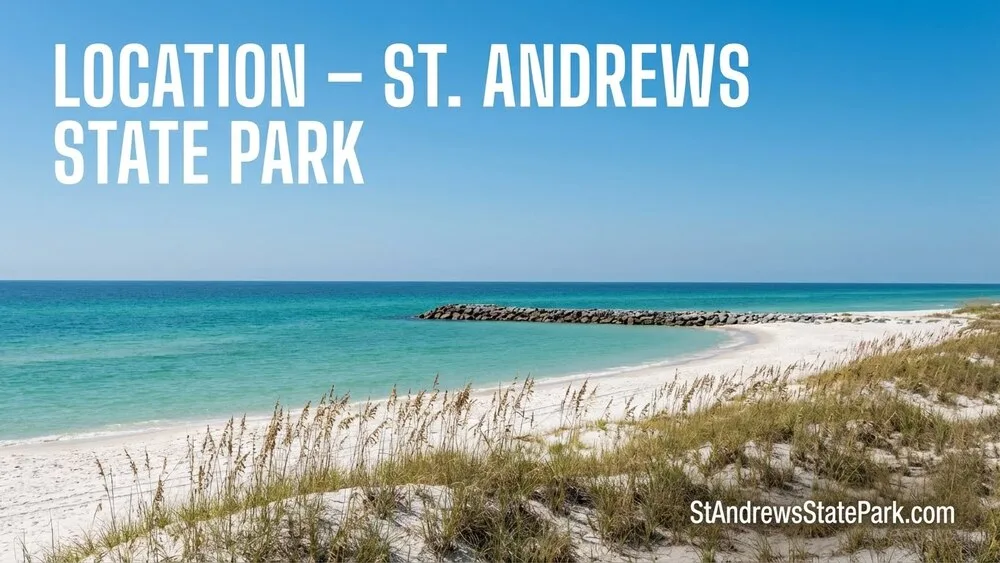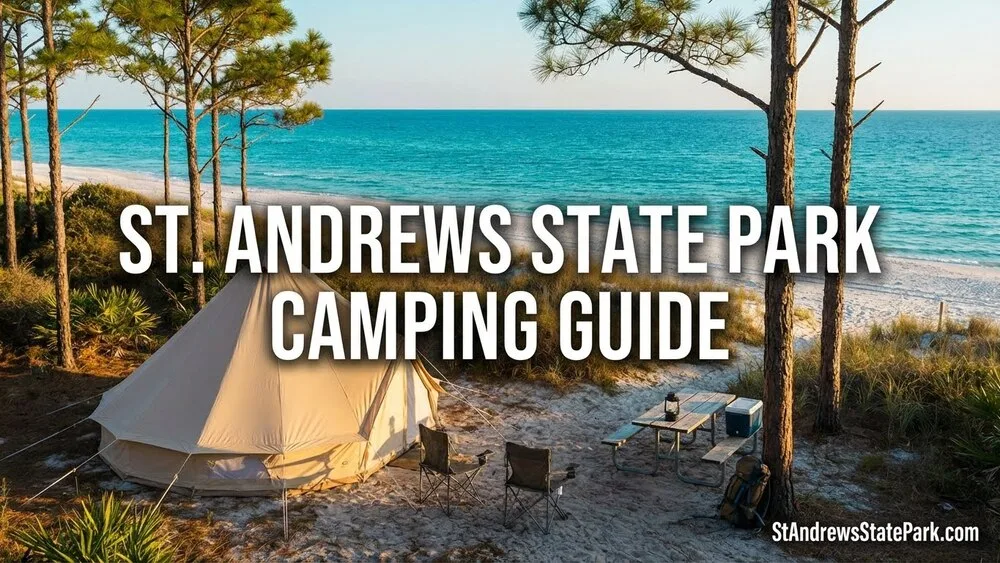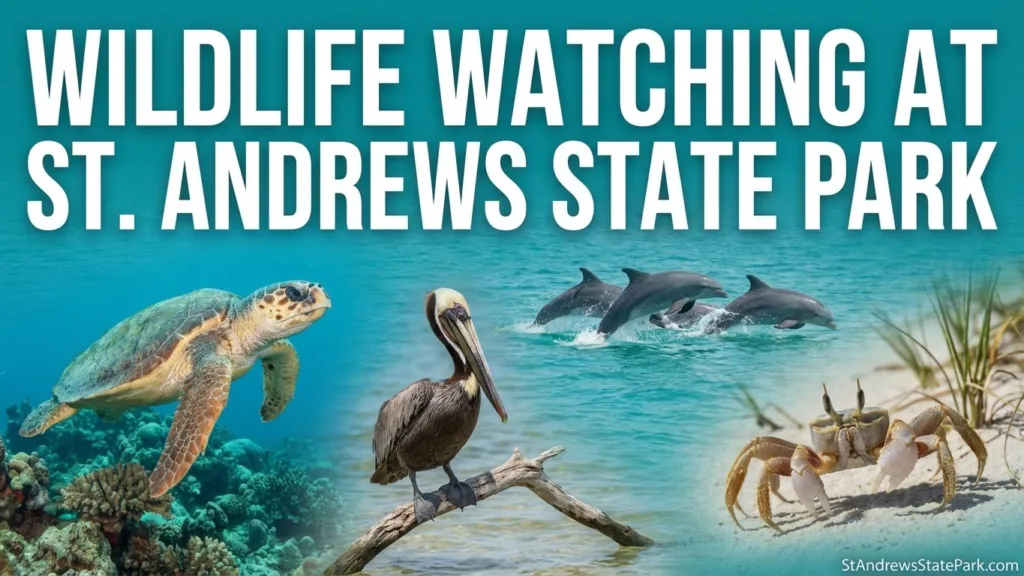
Wildlife watching at St. Andrews State Park feels like opening a book where every page is a different habitat. One moment you’re scanning open Gulf water, the next you’re listening for hidden birds in pine flatwoods. The park sits on a peninsula with shoreline on the Gulf of Mexico and Grand Lagoon, so you get a rare mix of saltwater, dunes, marsh edges, and coastal scrub in one compact place.
Habitats You Can Read Like A Map
- Jetties And Gulf Edge for seabirds and marine life
- Grand Lagoon Shoreline for calmer water and fish activity
- Gator Lake Area for freshwater wildlife and rookery views
- Pine Flatwoods And Scrub for songbirds and trail-side surprises
Wildlife Highlights People Come Hoping For
- Dolphins cruising near the rocky reef or visible from shore
- Shorebirds on the sand flats near the jetty area
- Wading Birds near wetlands and marsh edges
- Alligators at Gator Lake (with patient, respectful viewing)
Where Wildlife Shows Up Most Often
Not every corner of the park behaves the same way. Some areas are like wide-open stages where birds and dolphins are easy to spot. Other areas are more like a quiet library where the best sightings come from slowing down, watching edges, and letting your eyes adjust.
| Area | What To Watch For | What Makes It Work | When It Feels Most Alive |
|---|---|---|---|
| Fishing Pier (Gulf Side) | Brown Pelicans, gulls, Least Terns, winter gannets | Long sightlines for scanning water and flight paths | Morning to mid-day, especially with clear visibility |
| Beaches Near The Jetty | Snowy Plovers, Willets, occasional Black Skimmers | Open sand where shorebirds rest and forage | Cooler months and calm, uncrowded stretches |
| Buttonbush Marsh Overlook | Least Bitterns, Wood Ducks, marsh birds | Marsh edge habitat with cover and feeding lanes | Early day when birds move through reeds |
| Gator Lake Trail Area | Alligators, Great Blue Herons, Great And Snowy Egrets | Freshwater refuge plus rookery activity in season | Spring for rookery action; quiet mornings year-round |
| Pine Flatwoods | Brown-Headed Nuthatches, Loggerhead Shrikes, Eastern Towhees | Distinct upland bird community away from the beach | Cooler months and breezy days |
| Jetty Reef (Snorkel Zone) | Rays, angelfish, octopus, reef life; watch for dolphins | Rock structure creates habitat complexity | Clear-water days when surface glare is low |
Birdwatching Along The Gulf And Jetties
If you like birds that feel built for the coast—sleek, loud, and always in motion—the Gulf-facing side delivers. Stand at the end of the fishing pier and treat the horizon like a moving screen. In warmer months, you can scan for Least Terns and gulls, while Brown Pelicans patrol low over the water. In winter, the show can shift offshore with gannets plunging near the shore.
Near the jetty, the sand itself becomes the viewing platform. Shorebirds often choose beaches north of the jetty area for feeding and resting. It’s a simple scene—just sand, tide lines, footprints—yet you may spot Snowy Plovers and Willets, with Black Skimmers sometimes loafing nearby. Keep your pace slow; a sudden approach can clear the beach faster than a loud noise.
Small Details That Improve Bird Detection
- Watch the waterline where waves leave shells and tiny prey; that’s where shorebirds work.
- Look for shape first, then color. A distant bird is often a silhouette before it’s a species.
- Scan in short arcs, pause, then scan again. Your eyes catch more when you stop than when you sweep nonstop.
Freshwater And Marsh Viewing
St. Andrews isn’t only salt and surf. A short walk can put you in a freshwater setting where the mood changes—quieter, greener, and full of edge habitat. The Gator Lake area is known for its alligator population, and it also supports rookery-style bird activity in season. Think of it as a calm basin tucked behind dunes, where wading birds and freshwater life can concentrate.
For marsh birds, the Buttonbush Marsh Overlook gives you a focused viewing window. Species such as Least Bitterns and Wood Ducks are noted here, and the reed line often hides movement until you notice a ripple, a head turn, or a sudden hop between stems. It’s the kind of place where patience pays you back.
Gator Lake Trail Area
The Gator Lake Trail is short and sandy, and it reaches a higher point in scrub where you can get a wider view. The mix of scrub and lake edge means you may move from songbird habitat to wader habitat in minutes.
Heron Pond Trail Area
The Heron Pond Trail is an interpretive walk through coastal flatwoods. It’s a good fit when you want shade, quieter birding, and a slower pace. Treat every stop like a listening station—calls often give away what your eyes haven’t found yet.
Marine Wildlife From Shore And Shallow Water
Marine wildlife watching here can be wonderfully straightforward: find a stable viewpoint, reduce glare, and watch for patterns. The jetty reef area is noted for snorkeling sightings like rays, angelfish, octopus, and other reef life. From shore, keep an eye out for dolphins moving along the reef line or appearing suddenly in the calmer water near the rocks.
If you’re watching from the beach, look for clues rather than waiting for a perfect leap: a smooth, fast wake, a quick dark arc, or birds tracking baitfish. It’s a bit like spotting a friend in a crowd—you notice motion and rhythm first, then the full shape comes into focus.
Sea Turtle Season Awareness
Along the Florida Panhandle, the official sea turtle nesting season runs from May 1 through October 31. During this window, beaches can host nesting and hatching activity. A respectful approach matters: keep lights low at night, give wide space to any marked areas, and let natural behavior stay uninterrupted.
Upland Wildlife In Pine And Scrub
Step away from the shoreline and the cast changes. The pine flatwoods are listed as home to birds like Brown-Headed Nuthatches, Loggerhead Shrikes, and Eastern Towhees. These are the sightings that reward a different style of watching: less scanning, more listening, more trail-edge focus.
Try pausing where habitat lines meet—pine to scrub, scrub to open sand, trail to low vegetation. Wildlife often uses these borders like travel lanes. A quiet minute can feel long, then suddenly it isn’t.
Respectful Viewing That Keeps Wildlife Relaxed
Good wildlife watching is mostly about not being the reason an animal changes its behavior. When animals feel unpressured, you see more natural movement and get better observations. That’s the real win.
What To Do
- Use binoculars or a zoom lens so distance stays comfortable.
- Walk slowly, stop often, and let your presence fade.
- Stay on designated paths and watch from stable viewpoints.
- Keep voices low near resting birds on open sand.
What To Avoid
- Do not feed wildlife; it changes natural behavior.
- Avoid crowding shorebirds on the beach; give extra space as they forage.
- Don’t approach alligators at Gator Lake; view from a respectful distance.
- Skip sudden moves near dunes and marsh edges where animals blend in.
Timing And Seasonality Without Overthinking It
The park’s daily rhythm is simple: it’s open 8 a.m. to sunset. Wildlife activity often feels strongest when temperatures are mild and light is softer. Birdlife also shifts by season. For example, the Gulf scanning mentioned earlier includes Least Terns and gulls in warmer months and gannets in winter.
Spring can bring rookery energy around Gator Lake, and the May-to-October window overlaps with the sea turtle nesting season along this coastline. If you like structured bird lists, St. Andrews is also recognized as a migratory stopover for numerous birds and butterflies.
Practical Notes For Your Visit
St. Andrews State Park is located about three miles east of Panama City Beach, and it’s known for having over one-and-a-half miles of beaches along the Gulf of Mexico and Grand Lagoon. Admission is typically charged per vehicle, and the park operates with a clear daily schedule. If you like keeping details handy, the park’s contact phone number is commonly listed as (850) 708-6100.
For wildlife watching, your most useful “gear” is often simple: binoculars, water, sun protection, and a willingness to slow down. The park gives you the habitats; your job is to notice the edges, the movement, and the quiet patterns.