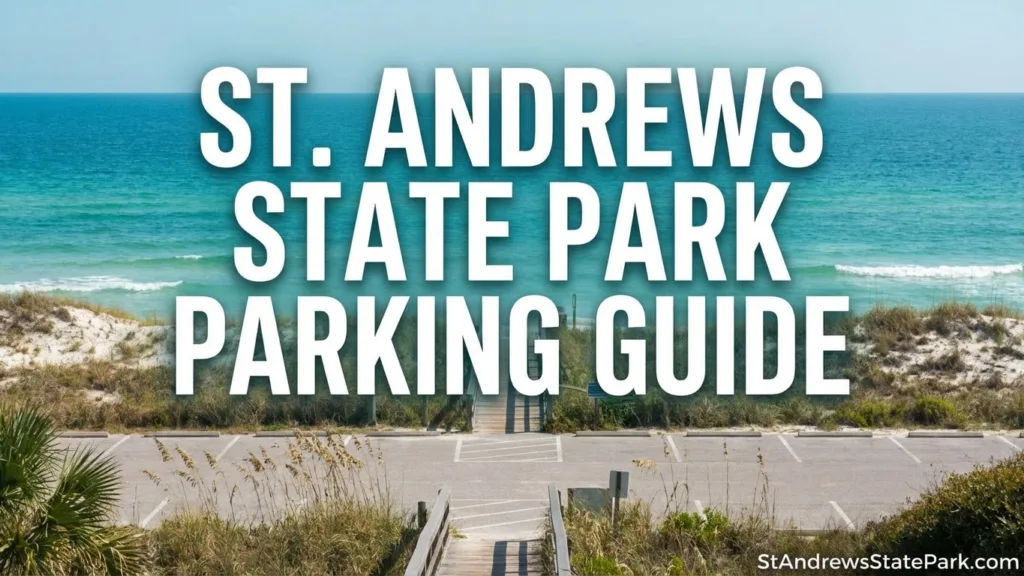
Parking at St. Andrews State Park is simple once you see the rhythm of the place. Think of the entrance as a friendly checkpoint, then the park opens up like a “choose-your-own-view” coastline: Gulf-side beach access, the Jetty area, and the Grand Lagoon side each pull visitors for different reasons. Pick the right spot to park, and everything you came for feels closer.
Before You Enter
Hours are 8 a.m. until sundown, every day. That “until sundown” detail matters for parking because it naturally creates a morning and afternoon wave of arrivals. Earlier usually feels calmer.
- Admission is $8 per vehicle (two to eight people).
- Single-occupant vehicle is $4.
- Pedestrians, bicyclists, and some extra-passenger scenarios are $2.
If you like arriving with less friction, you can purchase a single-use day pass online and bring your receipt on your phone or printed. Park staff may ask to see it at entry, so keep it handy like you would a boarding pass. Annual entrance passes are also available through park locations during business hours.
Need the essentials? The park address is 4607 State Park Lane, Panama City Beach, FL 32408. The phone number is 850-708-6100. For campers arriving after sunset, calling for gate instructions is the smooth move.
How Parking Works Inside The Park
Once you pass the gate, you’re not hunting for a single giant lot. St. Andrews State Park is set up with separate day-use areas, each with its own designated parking. You follow signs the same way you’d follow trail markers: pick your destination first, then let the park guide you there.
Here’s the key idea: parking choice is really about what you want to do next. Are you here for the Jetty and calm-water swim zones? Launching a boat on the Grand Lagoon? Or just looking for a relaxed beach setup with minimal walking? Answer that, and your parking decision becomes obvious.
Parking Areas People Use Most
| Area | Good Match For | What You’re Near | What To Expect |
|---|---|---|---|
| Jetty Area | Snorkeling, inlet views, jetty-side beach time | Jetty access points and busy-day hotspots | Popular for a reason. When the park is lively, this is where spaces feel most competitive. |
| Grand Lagoon Boat Ramp Parking | Launching, loading, meeting boat crews | Boat ramp and nearby lagoon facilities | Designed for water access on the lagoon side; early arrivals often feel easiest. |
| Fishing Pier Area | Fishing, slower-paced shoreline time | Fishing pier on the Grand Lagoon | A practical choice when your goal is “park, walk, start fishing.” |
| Overflow Parking | Extra capacity, especially when primary spaces are busy | Near lagoon-side activity zones and campground-adjacent areas | Also important for overnight guests with extra equipment that won’t fit on a site. |
Day-Use Parking And Entry Flow
For day-use visitors, the parking process starts at the gate. On many Florida State Parks days, the park can reach capacity during weekends and holidays, and staff may pause entry when it’s full. That’s why your arrival time matters more than your luck. If you want choices, arriving closer to the morning opening window usually gives you more.
- Keep your admission receipt or online purchase confirmation accessible.
- Follow posted signs to the day-use area you’re targeting (Jetty vs lagoon-side).
- Park fully inside a marked space; the park protects its natural edges, so grass parking and informal pull-offs aren’t part of the system.
One more detail that helps: St. Andrews has had projects aimed at improving entrance flow and parking lot access to ease peak-period congestion. That’s good news, yet the park’s popularity still creates busy moments—especially when the water looks like glass and the sky is pure Florida blue.
When The Jetty Area Makes Sense
If your plan includes the Jetty, treat parking like reserving a good seat at a show: the closer you arrive to prime time, the fewer “great seats” remain. It’s a magnet for swimmers, snorkelers, and people who want that dramatic meeting point of open Gulf energy and calmer water pockets.
Once parked, keep your gear setup simple. A lighter load makes the walk feel short, even if you’re a bit farther back. Comfort here is often about what you carry, not just where you park.
When The Grand Lagoon Side Fits Better
The Grand Lagoon side is the practical choice when your day revolves around boats, the fishing pier, or lagoon-side amenities. On this side, the park’s improvement plans have included better connections like sidewalks and vehicle access adjustments, which helps the whole area feel more “built for movement.”
If you’re meeting friends for a launch, parking here keeps the day smooth. Less back-and-forth, more time doing what you came to do. Simple wins add up.
Boat Trailers And Larger Setups
St. Andrews isn’t just a “park and walk” beach—boats are part of the daily scene. If you’re towing, aim for boat ramp parking and follow local signage like it’s the park’s own language. The goal is predictable: keep lanes clear, keep turns wide, and keep the launch area flowing.
For overnight campground guests, the rules get more specific. The campground guidance states that parking on the grass is prohibited, and trailers or similar equipment must be confined to the campsite. If it doesn’t fit, it goes to the overflow parking lot. The tone is clear—and it keeps the campground neat and navigable.
Campground Parking Rules People Miss
- No grass parking in the campground area. Use the designated pad or space.
- Keep trailers and similar gear on your campsite when they fit.
- If they don’t fit, use overflow parking as directed.
This is less about strictness and more like keeping a well-run marina: everyone moves easier when the rules stay consistent. Clear lanes keep the vibe relaxed.
Parking Timing That Feels Effortless
Want parking that feels like a gentle glide instead of a puzzle? The park’s own admission guidance notes that many parks can fill to capacity on weekends and holidays. That’s why I think of parking here like catching a calm tide: arrive earlier and you get more room to choose your spot, your walk, and your setup.
If you arrive and entry is paused because the park is full, it’s not a “game over” moment—it’s just the park protecting the experience inside. Try a different time window the same day when possible, and keep your plan flexible between the Jetty area and Grand Lagoon side. The park rewards a little adaptability.
Common Parking Questions
Is parking separate from admission? At St. Andrews, you handle admission at the entrance, then use the park’s designated lots in each day-use area. It’s a straightforward “enter once, park where you play” setup.
Can I buy entry online? Yes. If you purchase a single-use day pass online, bring your receipt (digital or printed). Park staff may ask to see it at entry, so don’t bury it under beach gear. Easy access keeps the line moving.
What about annual passes? Florida State Parks notes that annual entrance passes can be purchased at park ranger stations and museums during regular business hours. If you want immediate use, buying in person at a park location is typically the cleanest route. Simple, especially if St. Andrews is one of your repeat stops.
I’m camping and arriving after sunset—what happens? Campers who plan to arrive after sunset should call 850-708-6100 for gate combination and instructions. That call can save you from turning “late arrival” into a guessing game. One minute on the phone keeps the rest of the night smooth.