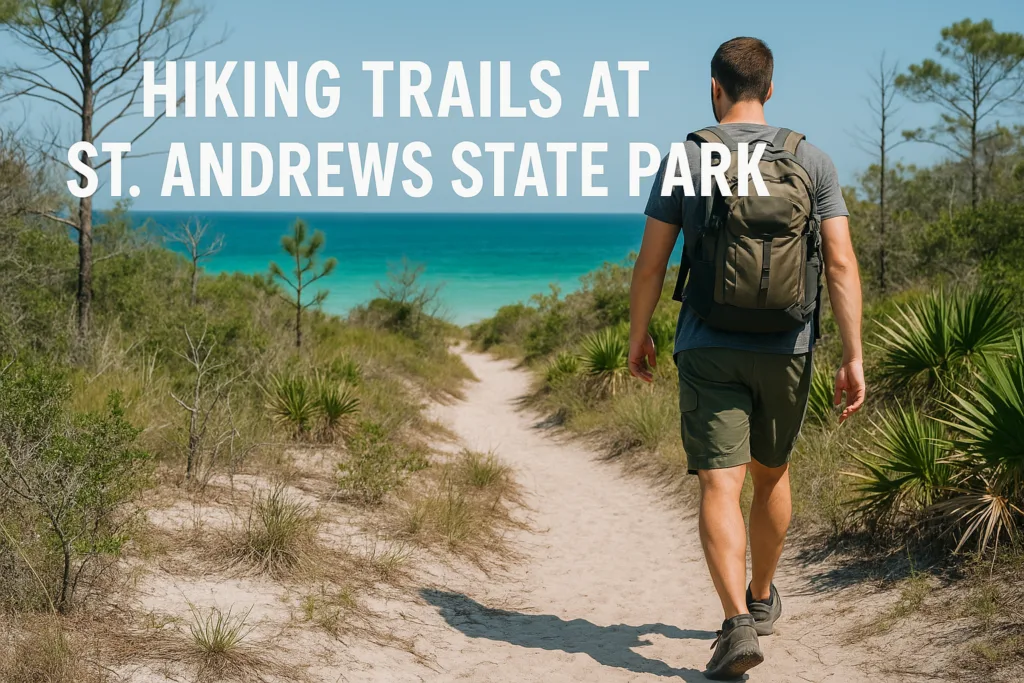
Walking the sandy paths of St. Andrews State Park, you move quickly from busy beach parking lots into a quiet world of pine woods, calm water and bird calls. Two short, well–marked hiking trails make it easy to step into this landscape without planning a full–day trek. On these loops, every turn offers another glimpse of coastal Florida, from bright dunes to shaded hammocks.
Overview Of Hiking At St. Andrews State Park
St. Andrews State Park in Panama City Beach, Florida offers hiking that is short, easy and very scenic. The park has two main nature trails, both roughly half a mile long: Heron Pond Trail and Gator Lake Trail. They are mostly level, family–friendly loops that pass through coastal pine flatwoods, scrub and lakeside viewpoints, making them ideal if you want a real nature walk in under an hour.
Because these trails are compact and well signed, they suit a wide range of visitors. First–time hikers, families with children, wildlife watchers and photographers can all enjoy them without needing special skills. Surfaces are mainly packed sand with some roots and low steps, so sturdy walking shoes are helpful, but advanced gear is not. It feels like a gentle introduction to Florida’s barrier–island ecosystems rather than an extreme challenge.
Key Trail Facts
- Number Of Official Nature Trails: 2 (Heron Pond & Gator Lake)
- Typical Distance: About 0.5 mile each loop
- Difficulty: Easy, low elevation
- Trail Surface: Sandy paths, some roots and short wooden sections
- Average Time: 20–40 minutes per loop at a relaxed pace
Who These Trails Suit
- Families looking for a short outing before or after beach time
- Birders hoping to spot herons, egrets and other wading birds
- Casual walkers who want a nature break, not a workout
- Visitors interested in local history, including historic turpentine operations
- Campers wanting an easy stroll from the campground into quiet woods
Main Hiking Trails
| Trail Name | Distance (Approx.) | Difficulty | Landscape & Highlights | Typical Time |
|---|---|---|---|---|
| Gator Lake Trail | 0.5 mile loop | Easy, a few short sandy climbs | Lakeside views, coastal scrub, rare rosemary, chance to see wading birds and distant alligators | 15–30 minutes |
| Heron Pond Trail | About 0.5–0.7 mile loop | Easy, mostly level | Pine flatwoods, small historic turpentine display, access toward Sandy Point views | 20–40 minutes |
Distances are approximate and can feel a little longer if you pause often for wildlife viewing, photos or interpretive signs. Both trails are designed to be approachable for casual hikers, while still showing off diverse coastal habitats.
Gator Lake Trail
Gator Lake Trail is a short interpretive loop that circles a man–made lake tucked behind the dunes. The path is mostly sandy, winding through low coastal scrub and patches of maritime hammock, with several side spurs that rise gently for better views. For such a small loop, the variety is surprising; one moment you are under shade, the next you are looking across open water dotted with wading birds.
Although the trail is “easy,” it is not completely flat. A few short climbs over sand and roots make it feel like a real hike without being demanding. From higher spots along the loop, you can look down over Gator Lake and the surrounding scrub forest. In spring, the lake often hosts an active rookery of herons and egrets, so bringing lightweight binoculars adds a lot. The setting feels oddly familar for coastal Florida: bright, breezy and full of subtle detail if you slow down.
As the name hints, alligators may be present in and around the lake. You view them from a safe distance along marked overlooks and never need to approach the shoreline. Staying on the official trail keeps both visitors and wildlife comfortable. It is a good example of how St. Andrews balances easy public access with sensitive habitat, especially around water.
Gator Lake Trail Highlights
- Quick lakeside loop: enjoy a full sense of place in under half an hour.
- Varied viewpoints: low overlooks, shady sections and open stretches along the water.
- Birdwatching potential: herons, egrets and other wading birds are often visible.
- Short sandy climbs that keep the walk interesting but still accessible for most visitors.
- Interpretive feel: the loop works like an outdoor classroom for coastal plants and animals.
For timing, early mornings and late afternoons are especially rewarding. Light is softer for photos, birds tend to be more active, and temperatures are lower. Midday sun can be strong on the more open sections, so sunscreen, a hat and a bottle of water make the experience more comfortable, even on such a short, easy trail.
Heron Pond Trail
Heron Pond Trail offers a different flavor of hiking at St. Andrews. Instead of circling a lake, the loop leads through flatwood pine forest, palmettos and scattered oaks before reaching views toward Sandy Point and the surrounding waters. Near the trailhead, a small display of a historic turpentine still introduces the area’s cultural history and how people once used these coastal forests.
The route is mostly level, with a sandy surface that feels soft but stable underfoot. Tall pines let in filtered light, so this trail can feel slightly cooler than more exposed sections of the park. Along the way, you may spot woodpeckers, songbirds and butterflies moving between the trees and understory plants. It is a gentle walk that encourages a slower pace, especially if you enjoy reading interpretive signs and noticing small details.
Families often choose Heron Pond because the path is wide, obvious and not intimidating. Children can look for animal tracks in the sand, examine pinecones or count how many different leaf shapes they see. Adults appreciate the combination of quiet forest atmosphere and glimpses of water near the outer parts of the loop. It is an easy way to experience Florida’s pine flatwoods without leaving the beach area far behind.
What To Look For On Heron Pond Trail
- Historic touch: the small turpentine display near the start hints at past industry on barrier islands.
- Pine flatwoods ecology: open pine canopy, palmettos and wiregrass create a classic coastal forest scene.
- Birdlife: listen for woodpeckers tapping, warblers calling and, of course, herons near the water.
- Soft sandy tread that is easy on knees but still feels like a natural trail, not a paved sidewalk.
- Opportunities for simple nature games with kids, from spotting tracks to naming plants and colors.
Other Short Walks And Connections
Beyond the two named nature trails, visitors can combine short walks along the main park road, boardwalks and beach access paths for more mileage. The paved road through the park is open to both walkers and cyclists, while natural footpaths like Heron Pond and Gator Lake are reserved for those on foot. This separation keeps the trails relaxed and makes it easier to listen for birds, wind and waves instead of bikes.
If you want a longer outing, one simple option is to hike both nature trails and link them via the park’s paved areas and sidewalks. In practice, this creates your own informal loop of a couple of miles, mixing forest, lakeside and beach views. You can also add short detours to overlooks, fishing areas or the jetty, turning a quick walk into a relaxed half–day of exploring.
Seasonal Conditions And Best Times To Hike
St. Andrews State Park sits in a warm, humid coastal climate, so season and time of day make a real difference. In summer, midday heat and humidity can feel intense even on short trails. Early mornings usually bring cooler air, softer light and more wildlife activity. Winter and shoulder seasons often offer comfortable temperatures for hiking throughout the day, though coastal breezes can feel cool near the water.
After heavy rain, low spots on the trails may hold standing water or become muddy. Checking the official park website or entrance signs helps you stay updated on any temporary closures or route changes. Mosquitoes and other insects are more active in warm, still conditions, so a bit of insect repellent and light, long sleeves can make a big difference in comfort. Think of it as preparing wisely so you can focus on the forest, wildlife and views, not the bugs.
Safety, Wildlife And Trail Etiquette
These trails are designed to feel welcoming, but they are still genuine natural areas. That means the usual hiking basics apply. Staying aware of your surroundings, giving wildlife space and respecting other visitors creates a safer, more pleasant experience for everyone. On Gator Lake Trail especially, view alligators and other animals from a distance and never attempt to feed or approach them.
- Stay on marked trails: this protects fragile plants and keeps you away from soft shorelines.
- Keep a respectful distance from wildlife and use zoom lenses or binoculars for close views.
- Carry water, even for a half–mile loop, especially in warm months.
- Pack out all trash, including snack wrappers and tissues, so the trails remain clean.
- Walk bikes on sidewalks near trailheads; do not ride bicycles on the natural footpaths.
Simple habits like yielding the trail on narrow sections, speaking quietly and letting others pass at overlooks help maintain the calm atmosphere that makes these hikes special. When visitors treat the area as a shared outdoor space instead of just a shortcut, the trails feel more like a small community of hikers, birders and nature lovers.
Simple Gear Checklist For These Trails
You do not need technical gear for Heron Pond or Gator Lake, but a few small items make the experience smoother and safer. Think of it as packing a compact day–hike kit that always lives in your car when you visit coastal parks. With the basics covered, you can decide on the spot whether to walk for ten minutes or wander a bit longer.
- Footwear: lightweight hiking shoes or sturdy sneakers that handle sand and roots.
- Water: at least a small bottle per person, more in hot weather.
- Sun protection: hat, sunscreen and sunglasses for open sections and nearby beaches.
- Insect repellent, especially in warm months or near still water.
- Light daypack for snacks, a compact camera and a simple first–aid kit.
- Binoculars or a zoom lens if you enjoy birding or distant wildlife viewing.
Sample Half–Day Hiking Plan
If you have a free morning or afternoon, it is easy to turn these short loops into a relaxed mini–adventure. Instead of rushing through, you can treat each trail as a different chapter in a coastal nature story, with plenty of pauses for photos, snacks and quiet observation.
Option 1: Lakeside Focus
- Start with Gator Lake Trail in the early morning for cooler temperatures and more bird activity.
- Walk slowly, taking each side spur to enjoy different lake perspectives.
- Spend a few extra minutes at overlooks, scanning for distant alligators and wading birds.
- After the loop, rest at a shaded picnic area and review photos or bird sightings.
Option 2: Forest And Water Combo
- Begin on Heron Pond Trail, taking time to read the historical information near the trailhead.
- Listen for woodpeckers and other forest birds as you move through the pine flatwoods.
- After finishing the loop, use paved paths to reach beach or lagoon viewpoints for a visual contrast.
- Finish with a quiet break on a bench or at a picnic table, enjoying the shift from forest scents to sea breeze.
Where To Learn More In The Park
For visitors who like extra context, St. Andrews State Park often offers ranger–led programs, seasonal events and guided walks that include these trails. Checking the park’s information boards or official website before your visit helps you find current schedules and any special themed hikes. On the trails themselves, interpretive signs provide short explanations of plants, animals and history, so you can learn as you walk.
If you enjoy planning ahead, you can also look up trail maps, recent trip reports and birding checklists from trusted sources before you arrive. Combining that information with on–the–ground signs creates a fuller picture of how the park’s dunes, marshes, forests and lakes connect. The result is a hiking experience that feels both simple and surprisingly rich, even when the loop itself is only half a mile long.