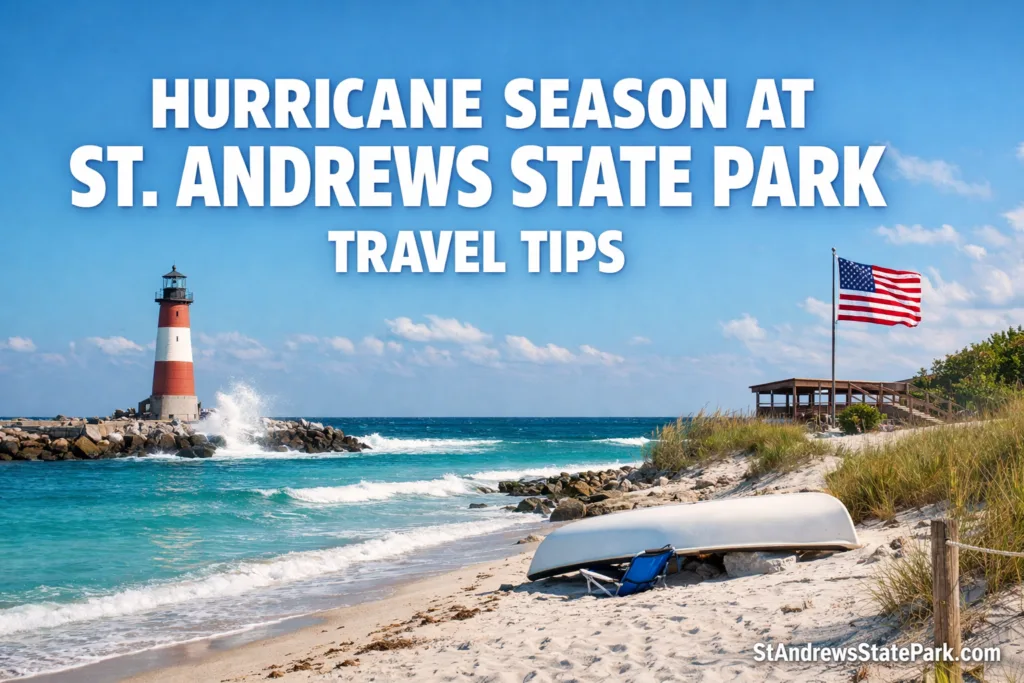
A trip to St. Andrews State Park during hurricane season is not automatically a risky or poor choice. It is simply a more weather-sensitive kind of coastal trip. This park sits where Grand Lagoon, St. Andrew Bay, and the open Gulf shoreline all shape the visitor experience, so changes in wind, surf, rain, or tropical weather can affect beach time, Shell Island access, campground comfort, and even how the park feels from one half-day to the next. That is what makes this place special. It is also what makes smart timing more important here than at a typical inland stop.
🌀 The big idea: Hurricane season travel here is about flexibility, not fear. At St. Andrews, the mainland beach, the jetty area, the lagoon shoreline, and Shell Island access do not all respond the same way to weather. Visitors who understand that difference usually have a better trip.
What The Verified Data Says Before You Book
| Verified Figure | Why It Matters For Hurricane Season Travel |
|---|---|
| Atlantic hurricane season: June 1 to November 30 [b] | If your trip falls inside this window, weather monitoring should be part of your planning, even if the forecast looks calm when you book. |
| Season peak: mid-August through mid-October; NOAA notes this stretch accounts for 78% of tropical storm days and 87% of Category 1-2 hurricane days, with September 10 as the climatological peak [c] | This is the part of the calendar when fixed beach schedules, non-flexible Shell Island plans, and tight arrival timing are most likely to feel inconvenient. |
| Park scale: 1,167 acres; 6 miles of beach across the mainland and Shell Island; 176 campground sites and 4 bathhouses; historical benchmark of 1,011,837 visitors in FY 2014/2015 [a] | This is not a tiny pocket beach. It is a large coastal park system with several use areas, exposed and sheltered shorelines, and a campground footprint that reacts differently to surf, rain, and tidal flooding. |
| Current visitor listing: the park is listed as open 8 a.m. to sundown, 365 days a year, with standard vehicle entry listed at $8 [d] | That sounds simple, but in storm season the smarter move is to check the park page again shortly before arrival, especially if you are camping or planning a long beach day. |
| Recent coastal work: post-construction monitoring after 2024 nourishment, with dune planting scheduled for spring 2025 [e] | This is a reminder that dune condition, shoreline management, and storm recovery work are current, active parts of how this park is maintained. |
One detail that often confuses first-time visitors is the park’s size on paper versus how it feels on the ground. The visitor-facing beach description highlights over 1.5 miles of white-sand beaches, which matches what many day visitors experience most directly on the mainland side. The park’s approved management plan, though, describes 6 miles of beach when the full park-managed shoreline, including Shell Island, is counted. Both numbers make sense; they are measuring different slices of the same coastal system. [i]
Why This Park Reacts Faster Than Many Visitors Expect
St. Andrews State Park is a barrier-edge park, not just a parking lot with a pretty beach. The 2016 approved plan places it at the confluence of St. Andrew Bay and the Gulf shoreline, and that geography matters. The same park contains a Gulf-facing beach, a jetty zone, a lagoon-side campground, marsh and hammock areas, boat access, and the Shell Island connection. When tropical weather or even a minor coastal disturbance pushes wind and surf in the wrong direction, the whole visitor experience can change quickly, even if the sky still looks deceptively fine. That coastal split personality is the key to planning well here.
🌊 A practical reading of the park: open Gulf shore usually feels weather first, the jetties can become less forgiving when surf builds, Shell Island transport depends on conditions, and the Grand Lagoon campground has its own flooding and shoreline concerns. It is one destination, but it behaves like several linked micro-destinations.
Mainland Beach And Jetty Area
The mainland beach and jetty zone are the parts most visitors picture first, and for good reason. The plan notes that the park’s Gulf Pier extends more than 400 feet, while the jetties are a draw for snorkeling, scuba diving, shore fishing, and classic beach use. That also means these areas are more directly shaped by wind direction, surf energy, and rip current risk. If tropical moisture or swell is in the region, the mainland beach may still be open, but it may not be the calm, glassy version of St. Andrews that people imagine from fair-weather photos.
Campground And Grand Lagoon
Campers need to think differently from day visitors. The approved plan says the Lagoon and Pine Grove loops contain 176 sites, and it also states that several campsites and road segments are vulnerable to frequent flooding, with portions of the campground shoreline showing significant erosion. That is one of the most useful hurricane-season details in the park documents because it tells you exactly where weather sensitivity becomes a comfort issue, even before a storm warning enters the picture. A wet, windy period does not have to cancel a stay, but it can make site selection, arrival timing, and gear protection much more important than they are in drier months.
Shell Island And Boat Transfers
Shell Island is one reason many travelers come here in the first place, yet it is also the part of the experience that deserves the most flexibility. The park plan describes shuttle collection from the mainland beach use lots to the dock area for transport across, and it emphasizes that the Shell Island portion of the park is otherwise largely undeveloped. In calm weather, that feels exactly like the escape people want. During tropical-season weather windows, though, it means your island time depends on boat operations, water conditions, and shore access practicality. If your trip has one non-negotiable item, do not make it the island crossing on the least flexible day of your schedule.
The Part Of The Season That Deserves The Most Respect
The official season runs from June 1 through November 30, but not every week inside that span carries the same planning weight. NOAA’s seasonality guidance is especially useful here: mid-August through mid-October is the stretch when Atlantic activity historically clusters most heavily, and September is the month when flexibility pays off the most. That does not mean every September trip is troublesome. It means travelers coming to a park with open Gulf exposure, dune systems, boat transfers, and lagoon-side camping should build in a little breathing room instead of planning every hour like clockwork.
There is another reason this matters at St. Andrews State Park specifically. The park plan notes that dunes should be assessed after each storm, and it documents earlier restoration work that included planting more than 434,000 sea oats and other dune species after tropical-storm erosion in 2004 and 2005. That tells you something important: storm season does not only affect your beach day. It affects dune stability, access points, and the living edge of the park itself. This coastline is managed carefully because it has to be.
What To Check Before You Leave Your Room, Rental, Or Campsite
- Check the official park page the same day you go. In hurricane season, that matters more than relying on a screenshot from when you booked. The current Florida State Parks listing is the right place to confirm operating status, fees, and basic access.
- Look at the National Hurricane Center, not social chatter. A quiet local sky can exist at the same time as a tropical setup that changes travel conditions later in the day or the next morning.
- Know your evacuation zone before you need it. Bay County’s official zone page also points visitors to AlertBay, which is a much better system than hoping you catch news at the right time.
- Read the beach forecast, especially for the jetties and pier area. The National Weather Service warns that even a low rip current risk does not mean zero risk near jetties, reefs, groins, and piers.
- Keep Shell Island plans movable. If you have two possible island days, use the better marine-weather window rather than locking yourself into the first available slot.
That last point is probably the most valuable travel tip in the entire article. Many visitors treat Shell Island like a fixed appointment. In hurricane season, it works better as a flex day. Give the island your best conditions, and let the mainland trails, overlooks, or lagoon side absorb the more uncertain window.
🛟 Smart Coastal Habit: Check conditions twice—once when you wake up, and once again before you enter the park or board for Shell Island. On this stretch of coast, the second check is often the one that saves your schedule.
Why Recent Coastal Work Matters To Travelers Right Now
If you want one current thread that connects park management with visitor experience, it is coastal maintenance. Florida DEP’s 2025-2030 Beach Management Funding Assistance Program lists the St. Andrews State Park Beach Restoration Project in post-construction monitoring after 2024 nourishment, with dune planting scheduled for spring 2025. That is highly relevant because hurricane-season travel here is not just about watching storms. It is also about understanding that beach width, dune recovery, and shoreline access quality are actively managed pieces of the visitor experience, not background details.
Florida State Parks has also highlighted campground renovations and new picnic pavilions at the jetty in recent project updates. For travelers, the lesson is simple: do not assume every loop, boardwalk, or support facility looks exactly like an older blog post or social video. In a storm-sensitive coastal park, recent work can be a good sign. It often means the park is investing in resilience, visitor comfort, and safer long-term access.
Travel Choices That Usually Work Better In Hurricane Season
- Put your highest-priority beach or Shell Island day earlier in the trip if you can. That gives you room to adjust instead of squeezing everything into the final 24 hours.
- Treat the Gulf side and lagoon side as separate planning zones. If the open beach looks rough, the day is not necessarily lost.
- Pack for moisture, not just rain. Extra dry bags, a towel rotation, and protected storage matter when humidity, spray, and quick showers are part of the pattern.
- For camping, think about drainage and exposure as much as scenery. A site that looks beautiful in bright weather may feel very different after sustained rain or wind.
- Watch the jetties with extra caution. The NWS beach guidance is especially relevant here because structures like jetties and piers can raise the seriousness of water conditions.
And one more thing: St. Andrews State Park remains worth visiting in this season precisely because it offers more than one style of coastal day. That is the hidden advantage here. You are not limited to a single flat beach plan. You have shoreline variety, birding habitat, boardwalk overlooks, pier and jetty zones, and a park layout that lets you pivot when the weather asks you to.
FAQ
Is St. Andrews State Park worth visiting during hurricane season?
Yes. It can be an excellent time to visit if you plan with flexibility. The park’s value is not limited to one exposed beach. Mainland beach access, lagoon-side areas, overlooks, trails, and the option to shift your best beach window all make the trip easier to manage.
When is the most weather-sensitive part of the season?
The full Atlantic season runs from June 1 to November 30, but mid-August through mid-October is the stretch that usually deserves the most planning flexibility.
Does Shell Island usually need more flexibility than the mainland park?
Absolutely. Shell Island access depends on transport and water conditions, so it is usually the part of the trip that should stay the most movable on your schedule.
Should campers plan differently from day visitors?
Yes. The official park plan notes that parts of the campground area are vulnerable to frequent flooding and shoreline erosion, so site comfort can change faster for campers than for day guests.
What should I check the night before my visit?
Check the official park page, the National Hurricane Center, your Bay County evacuation zone, and the National Weather Service beach forecast. That four-part check covers most of what matters.
Why do rip currents matter so much here?
Because the park includes jetties, a pier, and an open Gulf-facing shoreline. The NWS notes that dangerous rip currents can still occur near structures even when the overall risk is not at its highest category.
Source Notes
- [a] St. Andrews State Park Approved Plan (2016) — used for acreage, shoreline length, campground layout, visitor benchmark, pier length, dune restoration, and storm-sensitive management details (official Florida Department of Environmental Protection planning document).
- [b] National Hurricane Center — used for the official Atlantic hurricane season window of June 1 through November 30 (NOAA’s primary operational hurricane authority).
- [c] Peak Of Hurricane Season: Why Now? — used for the historical seasonality pattern, including the mid-August to mid-October concentration and September 10 climatological peak (official NOAA science explainer).
- [d] St. Andrews State Park Hours And Fees — used for current operating-hour and entry-fee context (official Florida State Parks visitor information page).
- [e] Beach Management Funding Assistance Program 2025-2030 Long Range Budget Plan — used for the 2024 nourishment monitoring note and spring 2025 dune planting schedule at St. Andrews State Park (official Florida DEP beach-management budget document).
- [f] Bay County Evacuation Zones — used for evacuation-zone lookup and AlertBay planning guidance (official Bay County emergency-management resource).
- [g] National Weather Service Beach Forecast Guidance For The Tallahassee Area — used for rip current risk descriptions and the reminder that structures like jetties and piers can remain hazardous (official National Weather Service beach-safety page).
- [h] Construction Projects Underway At St. Andrews — used for recent update context on campground renovations and new jetty picnic pavilions (official Florida State Parks project update).
- [i] Beaches At St. Andrews — used for the visitor-facing description of over 1.5 miles of white-sand beaches (official Florida State Parks interpretive page).