St. Andrews State Park is a sanctuary of stunning natural beauty, from its iconic white-sand beaches to its diverse wildlife. Protecting this treasure isn’t just the park rangers’ job; it’s a shared responsibility for every person who steps onto its sands.
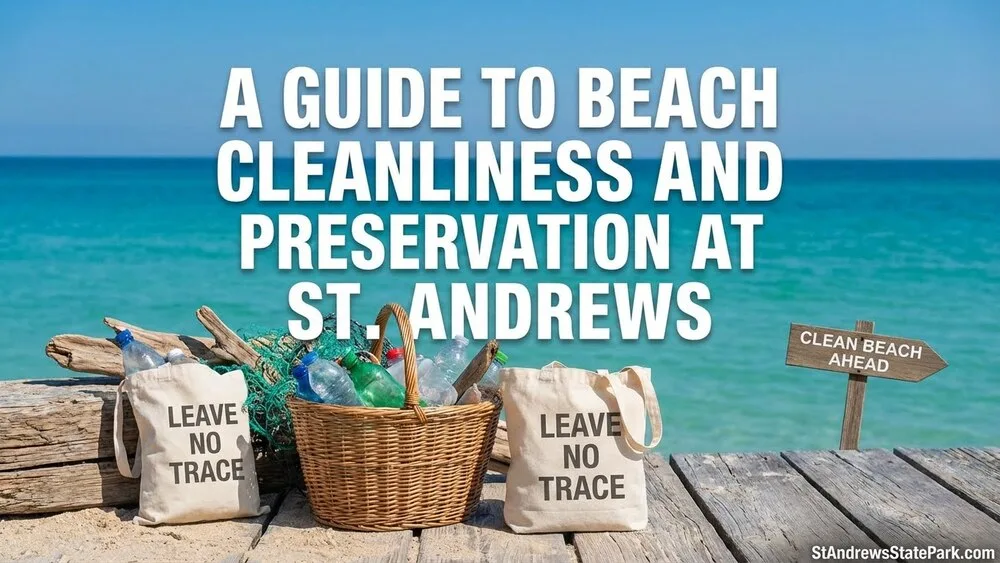
The “Leave No Trace” principle is a simple, powerful set of ethics to help us enjoy the outdoors without harming it. By following these guidelines, you can play a direct role in preserving the pristine condition of St. Andrews State Park for generations to come. Here’s how you can help.
What is “Leave No Trace”?
“Leave No Trace” means leaving a natural area exactly as you found it, or even better. It’s about making conscious choices to minimize your impact. For a beach environment like St. Andrews, this focuses on waste, wildlife, and the fragile dune ecosystem.
Key Principles for a Pristine Park
Applying these principles is easy and makes a massive difference.
1. Dispose of Waste Properly (Pack It In, Pack It Out)
This is the most critical rule for beach cleanliness. While the park has trash receptacles, they can fill up quickly on busy days.
- Bring Your Own Trash Bags: Always come prepared to collect all your waste.
- Pack It Out: If park bins are full, do not leave your trash beside them. Take it with you and dispose of it at home or at another proper receptacle. Animals can easily get into overflowing bins.
- Check Your Site: Before you leave, do a final sweep of your beach spot. Look for small items like bottle caps, cigarette butts (which are not biodegradable), and food wrappers.
- Fishing Line and Hooks: This is a major hazard. Fishing line is invisible underwater and entangles birds, dolphins, and sea turtles. Snip used line into small pieces and pack it out. Never leave hooks on the beach or piers.
2. Respect Wildlife from a Distance
The park is home to deer, alligators, raccoons, and a huge variety of shorebirds. Interacting with them is dangerous—for both you and the animal.
- Do Not Feed Any Wildlife: This is the golden rule. Feeding gulls, raccoons, or deer makes them dependent on humans, aggressive, and can make them sick. A “fed” animal is often a “dead” animal.
- Secure Your Food: Keep all food and snacks in sealed containers or a cooler. Raccoons and gulls are clever and will seize any opportunity to steal an unsecured bag of chips.
- Observe from Afar: Use binoculars or your camera’s zoom to watch wildlife. If an animal changes its behavior because of you, you are too close.
3. Protect the Dunes: Stick to Durable Surfaces
The sand dunes are not just piles of sand; they are the park’s fragile, living defense against erosion and are a critical habitat for plants and animals.
- Use Boardwalks and Paths: Always use the designated wooden boardwalks and marked footpaths to get to and from the beach.
- Keep Off the Dunes: Do not walk, run, or set up your beach gear on the dunes. The sea oats and other vegetation have delicate root systems that are easily destroyed, leading to dune collapse.
4. Leave What You Find
The natural beauty of the park is for everyone to enjoy.
- Take Only Photos: Leave shells, driftwood, and other natural objects as you found them. While the park generally permits the collection of a few unoccupied seashells, it’s best to leave them for others to see and for the ecosystem’s health.
- Never Take Live Animals: It is illegal and harmful to remove any living creature, including sand dollars, starfish, or crabs, from their habitat.
5. Be Considerate of Other Visitors
Part of preserving the park is maintaining its peaceful atmosphere for all visitors.
- Manage Your Noise: Respect the natural sounds of the beach. Keep music at a low volume that only your group can hear.
- Fill in Holes: If you dig holes in the sand, fill them back in completely before you leave. Deep holes are a serious tripping hazard for other walkers at night and a deadly trap for nesting sea turtles and their hatchlings.
A Note on Fires and Grilling
Open beach bonfires are not permitted at St. Andrews State Park. To cook, please use the designated charcoal grills provided in the park’s picnic areas. Dispose of hot coals in the designated receptacles or ensure they are completely cold and doused with water before placing them in a trash bin.
Your Small Actions, A Big Impact
St. Andrews State Park is a special place. By embracing the “Leave No Trace” ethic, you’re not just a visitor; you’re a steward of the land. Thank you for helping to keep this Florida gem wild and beautiful.