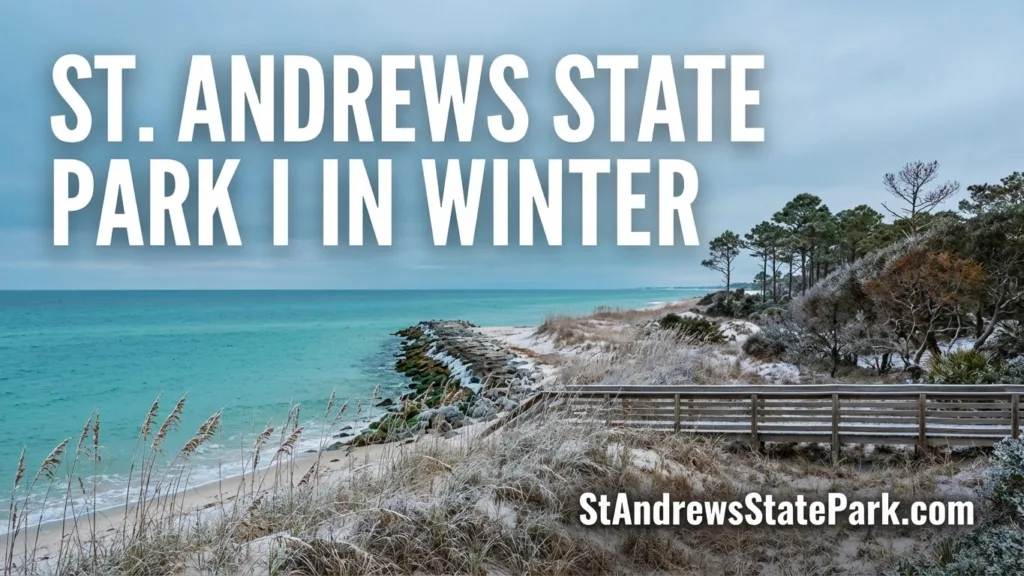
Winter at St. Andrews State Park feels like the coast takes a slow, happy breath. The light is softer, the air is crisp, and the park’s mix of Gulf beach and calm lagoon becomes extra easy to appreciate. Ever notice how a shoreline looks “sharper” when the heat haze is gone? In winter, that clarity shows up in the dunes, the pine flatwoods, and the long, clean lines of sand.
Winter Weather And Water
St. Andrews sits on the Florida Panhandle, where winter stays mild by many standards, yet still feels like a real season. Expect comfortable daytime walks, cooler evenings, and a coastline that can switch personalities when a fresh breeze rolls in. The Gulf water is usually refreshingly cool in winter, which changes how people use the beach: more strolling, more birding, more pier time, more “let’s just sit and watch the water” moments.
Typical winter conditions in the Panama City Beach area (numbers vary year to year, and day to day). These ranges help set expectations without pretending winter is the same every week.
| Month | Average Daytime High | Average Night Low | Average Sea Temperature | What You’ll Notice |
|---|---|---|---|---|
| December | Mid to upper 60s °F | Mid 40s °F | Mid 60s °F | Shorter days, warm sun at midday, cool shade in the morning. |
| January | Low to mid 60s °F | Low 40s °F | Low 60s °F | Brisk beach walks, calmer pace, great time for wildlife scanning. |
| February | Mid to upper 60s °F | Mid 40s °F | Low 60s °F | Hints of spring on sunny days, steady coastal breezes. |
Hours, Entry, And On-Site Essentials
This is a large, well-loved state park—about 1,167 acres—with multiple zones to explore, so it helps to know the basics before you spread out. Day use typically runs from 8:00 AM to sunset. Entrance fees are commonly posted as $8 per vehicle (two to eight people), $4 per single-occupant vehicle, and $2 for pedestrians or bicyclists. For the most current details, the gatehouse sign and park staff are the final word.
Winter Services Inside The Park
In winter, the park’s concession services often follow a seasonal schedule. If you like having snacks, gear, or rentals close by, these hours matter more than people expect.
- Jetty Store: Daily 9 AM to 4 PM (connects to the boardwalk and jetty area; beach gear and basic supplies).
- Pier Store: Daily 9 AM to 4 PM (handy if you’re headed toward the marina area).
- Camp Store: Daily 8 AM to 4 PM (camp essentials, plus many rentals depending on availability).
- Food Truck: Daily 11 AM to 5 PM (a simple, warm option on cooler beach days).
Seasonal schedules can shift with daylight and staffing, so treat posted times as the most reliable reference.
Beaches In Winter
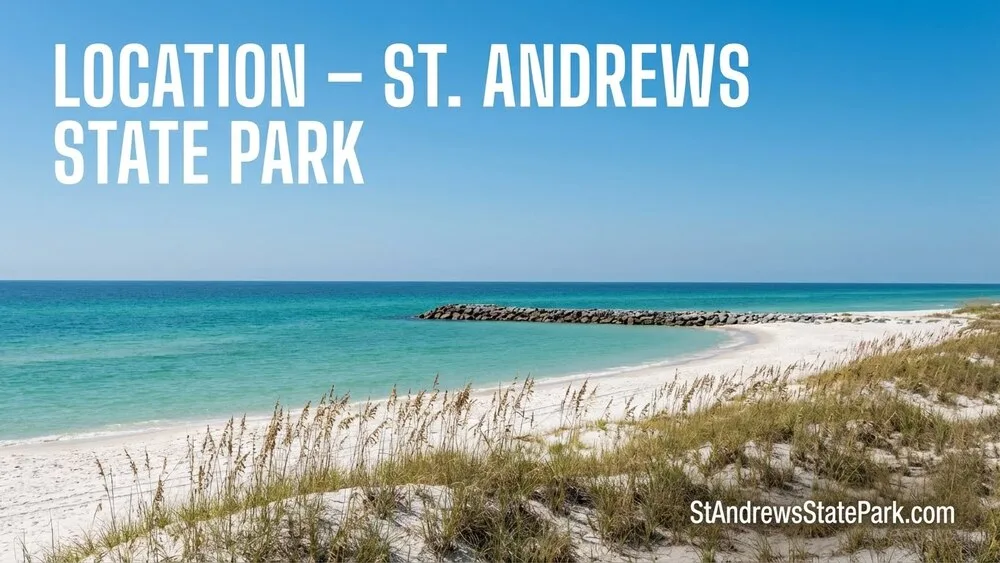
St. Andrews is famous for having over one-and-a-half miles of beaches split between the open Gulf and protected waters along the lagoon and pass. Winter changes the vibe, not the beauty. Think longer, quieter walks, more room to stop and stare, and fewer moments of “excuse me” as you pass someone on the sand.
Gulf Beach
The Gulf side is where you get that classic open-horizon feel. Winter sunlight can make the water look like polished glass on calm days, then turn it into a textured, moving surface when the wind picks up. It’s an ideal stretch for beachcombing, photography, and watching pelicans skim the surf line.
Jetty And Pass Area
The jetty zone is the park’s “edge of the world” feeling—rocks, current lines, and constant bird activity. In winter, the end of the pier and jetty area can be a great place to scan offshore for northern gannets diving near shore. It’s also a spot where you’ll often see dolphins moving along the reef line.
Grand Lagoon Shoreline
On the lagoon side, water is generally calmer, and winter makes it feel even more peaceful—like a sheltered outdoor room beside the Gulf. Families love this side in any season, and you may hear people call one shallow pocket near the jetties the “kiddie pool” because the water can be gentle when conditions cooperate.
Trails And Plant Communities
Winter is when the park’s inland side really shines. Without intense heat, short nature trails become surprisingly immersive. You’re moving through a mix of dunes, scrub, and pine flatwoods, and the textures stand out—needle carpets underfoot, palmetto edges, and sandy rises that feel like mini dunes inland.
Heron Pond Trail
This is a short interpretive loop (about 0.6 mile) that threads through dunes and low swales. One of the coolest winter details? You can still spot “catface” marks on older pines—evidence of historic turpentine tapping that once shaped coastal forests. It’s a small clue, like a quiet footnote in the landscape.
Gator Lake Trail
Another compact loop (roughly 0.4 mile), this trail reaches one of the park’s higher sandy points, giving you a wide look across scrub habitat and the water below. The lake’s name is a reminder that Florida wetlands are alive—wildlife belongs here. Enjoy the view, keep a respectful distance from the water’s edge, and let nature do its thing.
Birdlife And Wildlife Viewing In Winter
Winter is prime time for scanning and spotting, even if you’re not a dedicated birder. Why? Cooler air keeps you comfortable at the end of the pier, and seasonal movement brings different faces to the shoreline. From the Gulf-facing pier, you can watch for Brown Pelicans cruising low, and in winter you may see gannets diving offshore like white arrows. Near the jetty fishing area, beaches can be productive for shorebirds such as Snowy Plovers and Willets, and you might even catch Black Skimmers loafing on open sand.
Where To Look Without Overthinking It
- End of the pier: scan the Gulf for winter seabirds and feeding activity.
- Beaches near the jetty: watch for shorebirds moving along the wrack line.
- Buttonbush marsh overlook area: a strong spot for wetland birds; look for movement in reeds and still water.
- Pine flatwoods: listen for Brown-headed Nuthatches and keep an eye out for perched songbirds.
Snorkeling And Underwater Scenery
People associate snorkeling with summer, yet St. Andrews has a winter twist: the rock jetty reef can be a fascinating place to peer into when conditions line up. This area is known for showing off marine life like rays, angelfish, and even the occasional octopus. Visibility changes with surf and wind, so some days feel like looking through a window, other days like looking through frosted glass—still interesting, just different.
If you don’t want to get in the water, the same reef line is often a dolphin-watching lane. There’s something almost meditative about seeing a fin break the surface, then disappear, then reappear farther down the rocks—like a moving punctuation mark on the sea.
Fishing Areas And Pier Culture
Even in winter, the park keeps a steady rhythm of anglers along two fishing piers, the jetty, and nearby shoreline. The vibe is friendly, patient, and quietly focused—people watching the water the way others watch a campfire. Fishing rules in Florida can depend on where and how you fish, so it’s smart to make sure you have the appropriate license for your setup.
For visitors who aren’t fishing, the piers still offer a lot: long views, chances to spot birds working baitfish, and a front-row seat to the meeting of Gulf currents and protected water. It’s the kind of place where a ten-minute stop turns into forty.
Shell Island In Winter
Shell Island is the park’s wild neighbor—an undeveloped barrier island experience that feels extra peaceful in winter. Access is by boat, and the official ferry service typically runs on a seasonal schedule. A common winter setup is Tuesday through Sunday with departures around 10 AM to 2 PM, and a last pickup from the island around 4:00 PM.
One detail many people don’t realize until they’re planning: the ferry drop-off is about 2.2 miles down the island at the state park docks—not behind the jetty area. The island section served by the docks is nature-preserved, and there are no restrooms, shade structures, or food services on the island itself. That simplicity is part of the magic. It’s a clean, open canvas of sand, sky, and sea.
Camping And Glamping In Cooler Weather
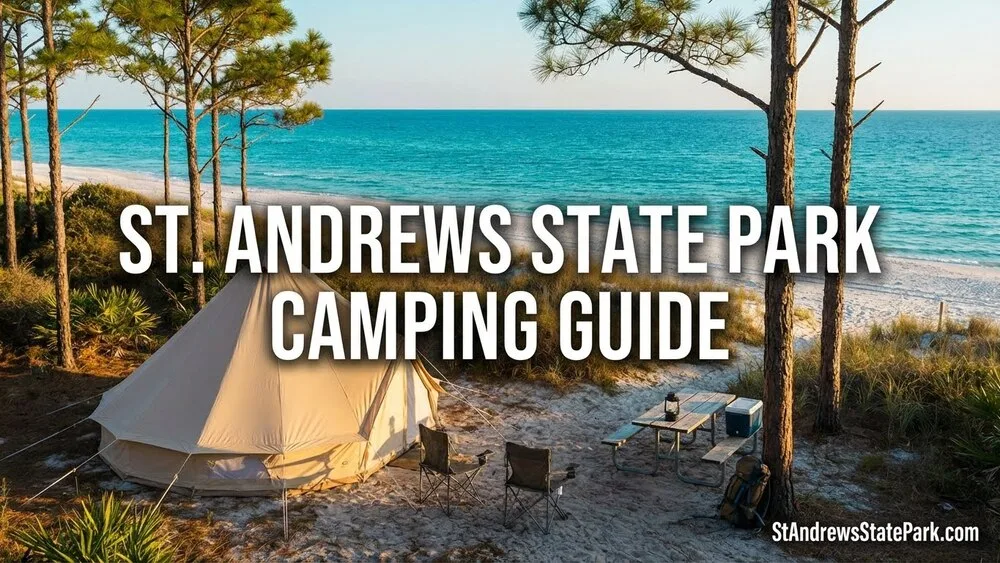
Winter is a comfortable season for staying overnight because you can enjoy the park without battling high humidity. St. Andrews is known for having a full campground and also offering glamping eco-tents that bring “real bed” comfort into a natural setting. The eco-tents are equipped with electricity, air conditioning, a queen bed, and a twin-sized cot, plus classic campsite basics like a picnic table and grill. It’s camping with a soft landing—still outdoors, just more comfortable.
What Makes Winter Overnights Feel Different
- More usable daylight for walking and exploring without heat fatigue.
- Clearer soundscape: waves, wind in pines, and bird calls carry farther in cool air.
- Comfortable camp routines: cooking, rinsing off, and relaxing can feel simpler in mild temperatures.
- Easy access to supplies: the Camp Store and other retail spots are often open daily on winter hours.
Why The Park Feels So Balanced In Winter
Some places are “only” beach. St. Andrews isn’t like that. Winter makes its variety feel even more obvious: open Gulf, protected lagoon, marsh edges, scrub dunes, and pine flatwoods—five distinct ecological moods in one compact coastline. If you like learning a place by walking it slowly, winter is the season that practically invites you to do exactly that.