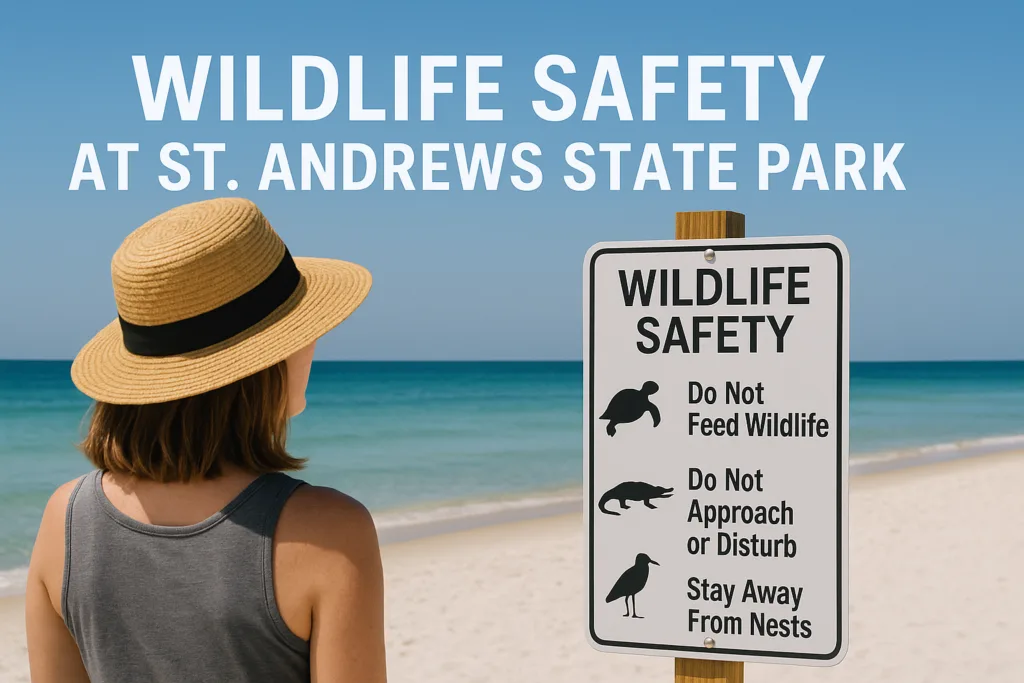
Wildlife safety at St. Andrews State Park is more than a checklist; it is how we protect this living coastal landscape and keep every visit relaxing, fun and safe. When you understand how the animals here live, move and hunt, you can explore with confidence and still give them the space they need.
Wildlife You May See
Between the Gulf beach, coastal dunes, pine forest, marsh and bay, the park feels like several habitats in one. You might spot dolphins, sea turtles, shorebirds, alligators, deer, raccoons and wading birds on a single day if you move slowly and pay attention.
This variety is exactly why wildlife awareness matters. Each species has its own comfort zone, and your job as a visitor is simple: enjoy the view, leave the animals wild and keep your group safe with a few easy habits.
Wildlife and Safety Focus
| Wildlife | Where You May See It | Safety Focus |
|---|---|---|
| Alligators | Gator Lake, freshwater ponds, marsh edges | Stay at least 30 feet away; never feed or approach. |
| Dolphins | St. Andrews Bay, near the jetties, boat channels | Watch from shore or boat; do not chase or feed. |
| Sea turtles | Nearshore Gulf waters, nesting beaches at night | Keep lights low, avoid nesting areas, never touch turtles or nests. |
| Shorebirds & wading birds | Beach, jetties, lagoon edge, Gator Lake | Walk around flocks, keep kids and dogs from running at birds. |
| Snakes | Dune and forest trails, sunny sandy spots | Watch your step, do not try to pick up or move a snake. |
| Raccoons & small mammals | Campgrounds, picnic areas, wooded edges | Store food securely, close coolers, never hand-feed. |
Quick Wildlife Safety Checklist
Think of the park as a shared neighborhood where the animals live full-time and you are the guest. These simple rules keep everyone comfortable and safe, whether you are on the sand, on a trail or at your campsite.
Always
- Keep a safe distance from all wildlife, even small animals.
- Store food and trash in closed containers or park bins.
- Stay on marked trails, boardwalks and designated areas.
- Teach children to watch animals quietly instead of shouting or chasing.
- Report injured, sick or unusually bold wildlife to a ranger.
Never
- Never feed any animal, on land or in the water.
- Do not throw food scraps, fish remains or bait on the ground.
- Do not chase, touch or corner wildlife for photos.
- Do not block an animal’s path back to water, cover or its nest.
- Do not let pets or kids approach wildlife, even “just once.”
See The Park’s Wildlife Before You Go
If you like to plan ahead, a short video can make the safety tips feel more real. Notice how visitors in the park stay on boardwalks, give wild animals room and enjoy the views without getting too close.
Alligator Safety Around Gator Lake
Alligators are part of the natural story at the park, especially near Gator Lake and other freshwater areas. They usually avoid people, but they can move quickly when they feel threatened or when food is nearby.
Ever wondered how close is too close to an alligator? A simple rule is to stay at least 30 feet (about 10 meters) away. If the animal changes what it is doing because of you, you are already too close and should back away slowly.
Keep children and pets well back from the water’s edge, especially near Gator Lake, marshes and any still or slow-moving water. Avoid jogging or walking right along the shoreline at dusk or after dark, when alligators may be more active.
If You See An Alligator
- Observe from a distance on the trail, boardwalk or shoreline.
- Keep children, strollers and pets beside you and away from the edge.
- Never offer food or throw bait toward the animal, even to “move it along.”
- If an alligator is blocking a trail, take another route or wait for it to move away on its own.
- If you feel unsafe, leave the area calmly and let a ranger know what you saw and where.
Feeding alligators or any wild animal is dangerous for them and for you. Animals that learn to expect food from people can lose their natural fear and may have to be removed from the park later, which nobody wants.
Staying Safe On The Trails
The park’s nature trails and boardwalks pass through dunes, scrub and maritime forest. These are great places to spot birds, butterflies and sometimes deer or foxes. They are also places where snakes and insects live, so a few habits make walking more comfortable.
You dont have to be afraid of every rustle in the grass, but you should stay alert. Watch where you step, look ahead on the trail and avoid reaching into thick vegetation or under logs where animals may be resting.
- Wear closed-toe shoes with good grip instead of flip-flops on trails.
- Stay on marked paths; taking shortcuts through dunes or brush can disturb nests and hide holes.
- If you see a snake, give it space and walk around it; do not try to move or identify it up close.
- Use insect repellent and check for ticks after longer hikes.
- Keep voices at a reasonable level so you can still hear animals and other visitors.
Marine Wildlife Safety In The Water
Along the Gulf shore and the jetties, clear water often reveals fish, rays and sometimes sea turtles or dolphins. It is an amazing experience to share the water with them, but they still need their space.
In shallow Gulf water, shuffle your feet instead of taking big steps; this gives resting rays time to glide away. If a turtle or dolphin swims near you, enjoy the moment, but let the animal choose the distance and direction.
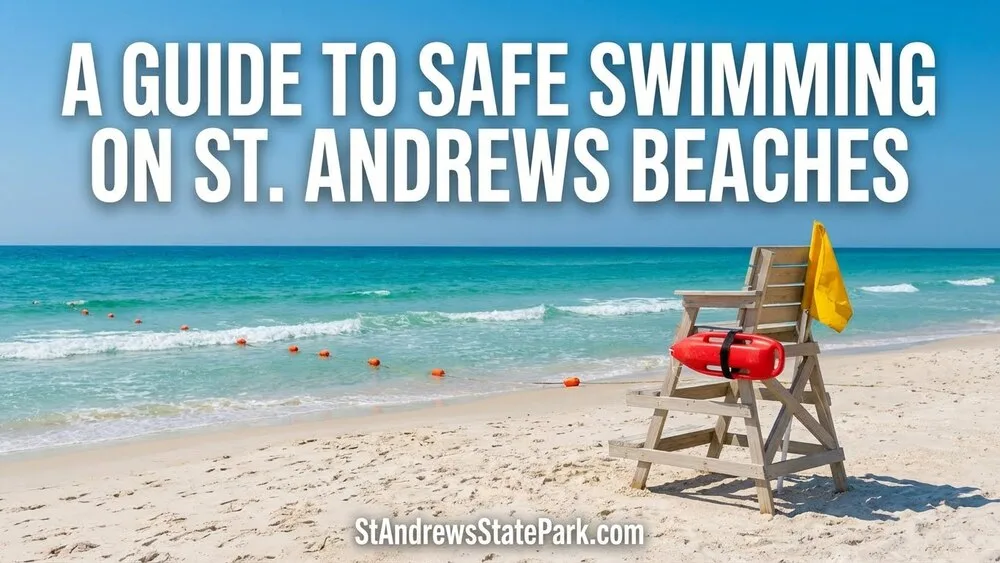
- Swim and snorkel only in designated swimming areas and follow lifeguard or ranger advice.
- Keep at least 50 yards (about half a football field) from dolphins and sea turtles when you are in a boat or kayak.
- Never chase wildlife with a kayak, paddleboard or personal watercraft.
- Do not touch or stand on rocks where animals may be hiding.
- Use dim, warm-colored lights on the beach at night and avoid shining bright beams onto the water.
Camping, Picnics And Food Storage
Campgrounds and picnic areas attract raccoons, squirrels and other curious animals that quickly learn where snacks are left out. Good food storage keeps your campsite tidy and stops wildlife from becoming a problem.
- Keep coolers, food bins and trash bags closed and latched when you are not using them.
- Use park trash and recycling cans rather than leaving bags beside your site.
- Clean grills and picnic tables after meals so crumbs do not draw animals in.
- Fish only in designated areas and use fish-cleaning stations if available; never clean fish where people swim.
- Store pet food indoors or in a sealed container rather than in open bowls overnight.
Visiting With Children
For many families, this park is where children see their first dolphin, heron or alligator. A little preparation turns those exciting moments into safe memories that kids will talk about for years.
- Before you arrive, explain that wild animals are not pets and cannot be touched or fed.
- Set a simple rule like “stay within arm’s reach” near water, on piers and around Gator Lake.
- Let kids use binoculars to watch wildlife from a distance; it feels like a fun game.
- Show children how to walk around bird flocks instead of running through them.
- Use questions such as “What is that animal doing?” to help kids focus on behavior, not just on getting closer.
Bringing Pets To The Park
Well-behaved pets can join the adventure as long as they help protect the park’s wildlife and other visitors. A few extra steps make outings smoother for everyone.
- Keep pets on a short, handheld leash at all times in allowed areas.
- Avoid posted no-pet zones such as swimming beaches, certain buildings and playgrounds, where pets are restricted to protect both people and wildlife.
- Do not let pets drink from or swim in freshwater ponds or Gator Lake, where alligators may be present.
- Pick up pet waste and place it in park trash cans to keep trails and campsites clean.
- Watch your pet’s body language; if they seem nervous about wildlife, move farther away.
If Something Feels Unsafe
Trust your instincts. If a situation with wildlife ever feels wrong—an animal is too close, acting strangely or blocking your way—give it space, move your group to a safer spot and tell a ranger as soon as you can.
- For life-threatening emergencies, contact local emergency services immediately.
- For non-urgent concerns, speak with staff at the ranger station or campground office.
- Note the location, time and what you observed so staff can respond effectively.
With these habits, you help keep St. Andrews State Park a place where wild animals stay wild and every visit feels both exciting and safe.