Sitting on the boardwalk above the emerald water at St. Andrews State Park, it only takes a second to notice the tall pole with a colored flag snapping in the breeze. That simple piece of fabric is one of your most important tools for a safe day at the beach. Understanding the beach flag system here means you can relax, let the kids play, and enjoy the Gulf without guessing what the water is doing.
Beach Flag System In Florida and At St. Andrews
Florida uses a uniform beach warning flag program on public beaches, and St. Andrews State Park follows this system closely. The same colors you see along Panama City Beach also fly over the Gulf-side shoreline and near the jetties inside the park. Each color gives a quick, visual summary of:
- Wave height and surf energy
- Strength of currents, especially rip currents
- Overall swimming risk for that moment
- Whether there is dangerous marine life in the area
You do not need to be a surf expert. If you learn what each flag color means and build the habit of checking it every time you step onto the sand, you are already behaving like a local.
Beach Flag Colors At St. Andrews State Park
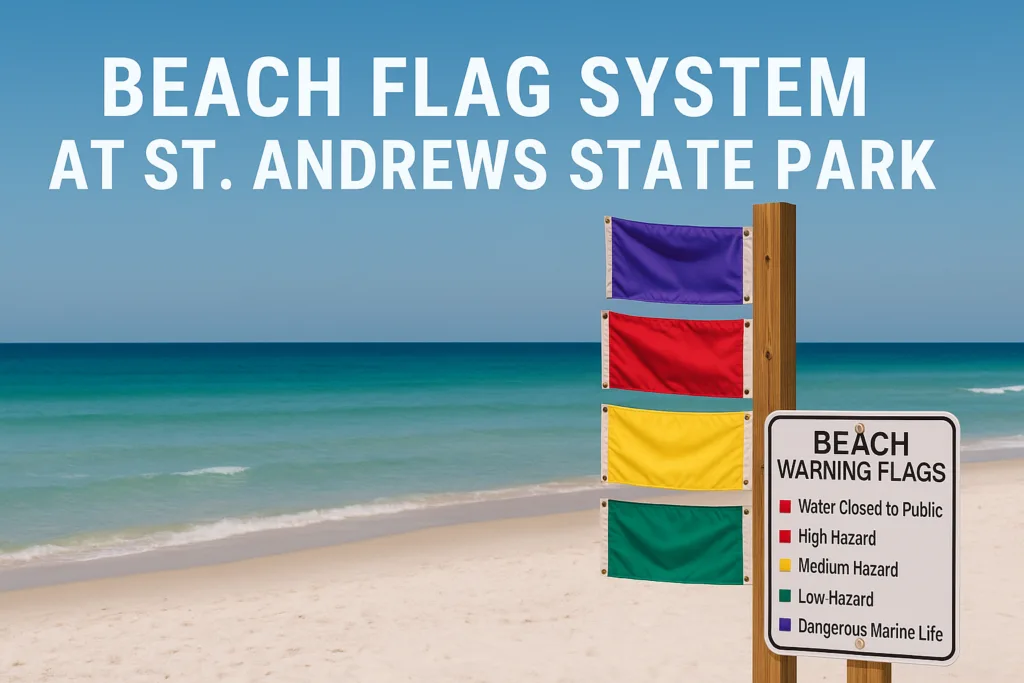
The park uses five key signals in its color-coded flag system: double red, single red, yellow, green, and purple. Below is a quick reference you can skim before you even pack the car.
| Flag Color | Official Meaning | What It Means At St. Andrews |
|---|---|---|
| Double Red | Water closed to the public | No swimming in the Gulf. Enjoy the sand, boardwalks, lagoon, trails instead. |
| Single Red | High hazard – high surf and/or strong currents | Only very strong, experienced swimmers should enter; children and weak swimmers stay in shallow or lagoon areas. |
| Yellow | Medium hazard – moderate surf and/or currents | Good conditions for careful swimmers, but wear flotation for kids, stay near others, and watch for changing waves. |
| Green | Low hazard – calm conditions, exercise caution | Generally calm Gulf, ideal for families and newer swimmers, but never swim alone or far from shore. |
| Purple | Dangerous marine life | Marine life such as jellyfish or stingrays have been reported; choose lagoon spots, wear water shoes, and enter the water slowly. |
Think of this table as your daily safety translator. A quick glance at the flag can change how you set up your beach day, whether you head straight to the surf or choose a calmer corner of the park.
Double Red Flag – Water Closed
When you see two red flags stacked on the pole, the Gulf is officially closed to swimmers. At St. Andrews, this usually means very strong rip currents, powerful shore break, or dangerous weather offshore. You can still enjoy the beach, picnic areas, trails, and jetties, but the smart move is to keep your feet out of the Gulf water, even if it looks calmer than it is from shore.
Single Red Flag – High Hazard
A single red flag means strong surf or currents that can knock adults off their feet. On days like this I’ve watched confident visitors step into waist-deep water and immediately feel the pull of the Gulf. If you are not an experienced ocean swimmer, stay where the waves are breaking gently at your ankles or enjoy the protected lagoon instead. Children should always wear a coast guard–approved life jacket, stay within arm’s reach, and never turn their back to the surf.
Yellow Flag – Medium Hazard
Yellow flags are the ones you will probably see most often at St. Andrews. They signal moderate surf and currents: fun waves for bodyboarding and splashing, but not the time to be careless. Under yellow, set simple rules for your group:
- Pick a fixed landmark on shore (like a jetty or flagpole) and tell kids never to drift past it.
- Keep non-swimmers in shallow water where they can stand.
- Use fins or a flotation device if you plan to swim out a bit deeper.
- Check the flag again when you come back from lunch; it can change during the day.
Yellow looks friendly, but it can flip to red quickly when wind and tide shift, especially along the open Gulf-facing beach.
Green Flag – Low Hazard
A green flag is the closest you will get to a “go ahead and enjoy” signal. The water is usually clear and gentler, perfect for kids wading at the shoreline or for floating just beyond the break. Still, it is not a free pass to switch off. Calm days can hide subtle rip currents, and it is easy to feel almost invincable when the Gulf looks like glass. Swim with a buddy, keep an eye on the jetty rocks and currents, and stay within a comfortable distance from shore.
Purple Flag – Marine Life
When a purple flag flies (often alongside green, yellow, or red), it means potentially harmful marine life is around. Most commonly, that is jellyfish or stingrays in this part of the Gulf. On purple-flag days at St. Andrews, I like to suggest:
- Starting in the shallow lagoon or “kiddie pool” area where the water is calmer.
- Shuffling your feet when walking in deeper sand to alert stingrays.
- Wearing water shoes for better protection.
- Checking with rangers or staff if you are unsure what type of marine life has been spotted.
A purple flag does not mean you must stay off the sand; it simply tells you to enter the water slowly, look around, and make choices that keep your day enjoyable.
Where To Find Beach Flags Inside The Park
The flag system is only helpful if you actually see the flag. At St. Andrews State Park, take a moment to look up in these spots before you spread your towel:
- Near the main Gulf-side boardwalks where you first step onto the sand.
- By popular areas around the jetties and surf zone.
- Close to information boards and ranger stations at key access points.
- At or near launch points for the Shell Island ferry and shuttles, where staff often reference the current flag.
If you walk onto the beach and cannot immediately spot a colored flag, pause and look around until you find it, or ask a ranger. That thirty-second check can completely change your plan for the day.
How Rangers Decide Which Flag To Fly
The flag is not chosen at random. Park staff and local safety teams use a mix of real-time observations and weather information to decide which color to raise. They are watching more than just the height of the waves you see from your beach chair.
- Wave height and period – how big the waves are and how quickly they arrive.
- Rip current risk – especially in channels near the jetties and sandbars.
- Wind direction and speed – onshore winds often build stronger surf.
- Recent incidents – rescues or close calls can lead to a more cautious flag choice.
- Reports of marine life – jellyfish blooms, stingrays, or other concerns trigger the purple flag.
Because conditions change, the flag can be updated during the day. If you arrive under green and stay through the afternoon, check again before you head back into the Gulf after a break.
What To Do Under Each Flag Color
Green and Yellow Days
On green and yellow days, most visitors will swim, snorkel, and play in the surf. To keep things safe:
- Swim in front of other people; never isolate yourself far down the beach.
- Give kids a clear depth limit, like “no deeper than your waist.”
- Use a life jacket or float for weak swimmers, especially in waves.
- Take a break every 20–30 minutes to re-check the flag and how you feel.
Red and Double Red Days
On single red days, the safest option for many visitors is to enjoy the water only at the edge, where waves are small. On double red days, stay completely out of the Gulf and choose:
- The calmer lagoon and bay side areas.
- Shell hunting and sandcastle building along the high-tide line.
- Walking the boardwalks and watching the surf from a safe distance.
- Wildlife spotting near the jetties instead of swimming beside them.
Purple Flag Days
When the purple flag is raised, adjust your plans but do not feel you must go home:
- Ask a ranger what marine life has been reported that day.
- Consider focusing on shoreline play, paddling, or wading rather than long swims.
- Rinse off small stings immediately at the showers and seek help if pain feels severe.
Quick rule of thumb: the rougher the flag color (red, double red), the more your day should shift toward sand, views, and trails, not swimming. Let the flag choose the type of fun you have.
Rip Currents and The Beach Flag System
Rip currents are powerful, narrow channels of water that flow away from shore. Around the jetties and sandbars of St. Andrews, they can form even when the surface looks fairly calm. The flag system helps warn when they are more likely, but a rip can exist under green or yellow flags too.
Here is a simple plan every swimmer in your group should know by heart:
- Float and breathe – do not fight the current straight back to shore.
- Swim parallel to the beach until you feel the pull weaken.
- Signal for help by waving one arm and calling out while you keep floating.
Before you let kids jump into the Gulf, ask them, “What will you do if the water suddenly pulls you out?” That one question turns the red flag warning from a sign on a pole into a conversation everyone remembers.
Choosing Between Gulf, Lagoon, and Shell Island
One of the best things about St. Andrews State Park is the variety of water environments packed into one peninsula: the open Gulf, the calmer lagoon, and the wilder stretch of Shell Island reached by ferry. You can match each area to the day’s flag color and your group’s comfort level.
Gulf-Side Beach
- Best on green or cautious yellow days.
- Great for waves, bodyboards, and surf-style swimming.
- Always check for red or double red before going beyond knee-deep.
Lagoon and Kiddie Pool Area
- Ideal for very young children and cautious swimmers.
- Helpful backup when the Gulf flag is red or double red.
- Still follow basic rules: watch depth changes, wear life jackets, and keep eyes on the shoreline.
Shell Island and other nearby spots use the same Florida beach flag system, so once you learn it at St. Andrews, you can read the colors all along this part of the Gulf Coast.
Planning Your Day With The Flag In Mind
Checking the flag is not a one-time action when you arrive. The most relaxed beach days I’ve had at St. Andrews all started with a simple routine centered on the flag color.
- Before you leave home: Look up current conditions for Panama City Beach and nearby parks so you know what to expect.
- At the entrance or parking lot: Note the flag color and explain it to everyone in your group, especially kids.
- When choosing a spot: On red days, pick a place closer to the lagoon; on green days, the Gulf front may be your first choice.
- During the day: Re-check the flag pole after lunch or when the wind changes.
- Before you leave: Take a quick last look and note how the color compares to when you arrived; over time, you will build a feel for local patterns.
Tip for families: make one person the “flag checker” for the day. Rotate the role between adults or older teens so everyone stays engaged with the conditions.