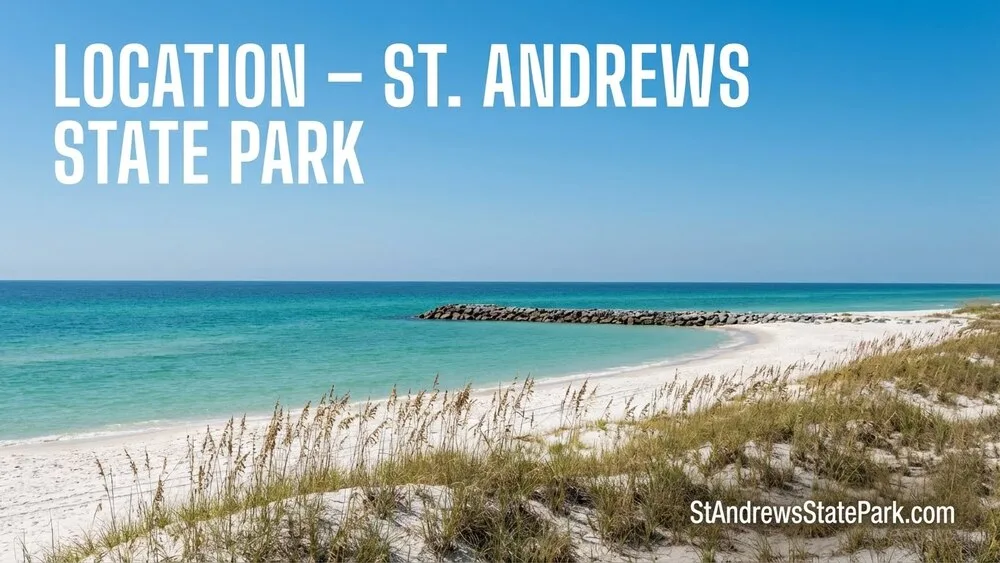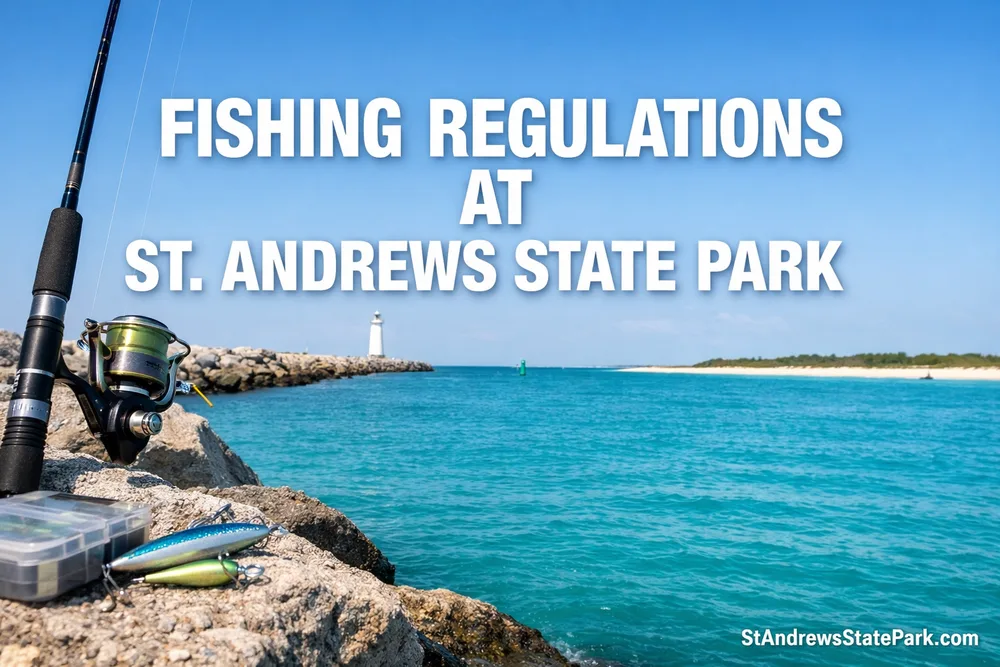
Fishing at St. Andrews State Park feels like stepping into a living, breathing classroom. One minute you’re on jetty rocks watching clear water rush through the pass, the next you’re casting along calmer edges near the lagoon. With that variety comes one big responsibility: following the right fishing regulations for where you’re standing. So what actually applies here, and how do you stay confidently within the rules without turning your beach day into homework?
How Fishing Rules Work Here
Think of St. Andrews State Park fishing regulations like a two-layer map. The park sets site rules (where you can fish, how to share space with swimmers and other visitors, and what’s posted on signs). Then Florida’s statewide rules control the fish regulations themselves—seasons, size limits, bag limits, and methods of take. If you remember just one idea, make it this: the park experience is local, but the catch rules come from the state’s fishing regulations.
Because this park sits on the Gulf side of Florida, much of what anglers do here falls under Florida saltwater fishing regulations. Florida also defines state waters in the Gulf as extending from shore out to 9 miles. If you’re fishing offshore beyond that line (usually by boat), you’re in federal waters and different rules may apply. Shoreline and jetty fishing stays in state waters, but it’s still helpful to know where that boundary lives on the map.
Park-side rules are usually visible: posted signs, designated activity areas, and instructions from staff. When you see a sign, treat it like the final word for that exact spot.
Statewide rules change by species and season. That’s why anglers who stay sharp rely on official regulation tools rather than memory. Fish today, check today.
Where Fishing Happens And What That Means
Official park information highlights pier, jetty, and surf fishing as key ways people fish here. That matters because the water type and the structure you’re fishing around can affect which regulations and best-practice rules apply.
| Area Inside The Park | What Regulations Usually Control The Catch | What To Confirm On Site |
|---|---|---|
| Jetty Rocks and pass-adjacent shoreline | Saltwater rules for species, seasons, size, and bag limits | Any posted restrictions for specific stretches; stay within designated access areas |
| Surf Zone along the Gulf beach | Saltwater rules for shoreline species and harvest limits | Designated swimming areas and any posted “no fishing” zones |
| Piers and lagoon-side access points | Saltwater rules (often brackish water behaves like saltwater for regulation purposes) | Whether the pier has a valid pier license posted (it can affect personal license needs) |
| Any freshwater-only pond or lake (if open to fishing) | Freshwater rules for species limits and methods | How the waterbody is classified in official tools and what signage says |
Who Needs A Fishing License
Florida’s license rules are straightforward once you zoom in on the details. The key point is that a fishing license is generally tied to the act of attempting to take fish. In other words: if you cast a line for catch-and-release, it still counts as fishing under the licensing rules.
License basics for visitors
- Non-residents age 16+ generally need Florida licenses to fish in freshwater or saltwater.
- Out-of-state fishing licenses do not count as valid Florida fishing licenses.
- Catch-and-release still requires the appropriate license because you’re attempting to take fish.
For St. Andrews State Park, official park information states that a Florida saltwater fishing license is required for fishing within the park. That matches the reality on the ground: most popular fishing here is coastal, pass-adjacent, or lagoon-side. If you’re ever unsure about a particular shoreline pocket, check posted signs and confirm in an official regulation tool before you cast.
Common License Exceptions You Should Know
Florida also recognizes a few practical situations where you may not need to carry an individual saltwater fishing license. These are easy to miss, so it’s worth reading them carefully.
- Under age 16: children under 16 are typically not required to have a recreational fishing license.
- For-hire boats: fishing from a properly licensed guide/charter/party boat can cover individual license needs for saltwater.
- Licensed piers: fishing from a pier that holds a valid saltwater pier license can cover anglers on that pier.
- Free fishing days: Florida offers specific days where certain license requirements are relaxed—these are date-specific and published in advance.
Notice the pattern? These exceptions depend on the setting (boat or pier) or the calendar (free fishing days). That’s why it’s smart to look for a posted pier-license sign and keep your license proof handy when you’re fishing anywhere else in the park.
Saltwater Rules That Matter Most At The Park
When people ask about fishing regulations at St. Andrews State Park, they usually mean one thing: “What can I keep?” The answer depends on the species, the season, and sometimes the exact stretch of coastline. Florida’s saltwater rules are published by species and updated as needed, so the most reliable approach is to check the current rules for your intended catch before you start fishing.
Here are the categories that influence harvest rules the most:
- Size limits: minimum and sometimes maximum sizes, measured a specific way depending on species.
- Bag limits: how many you can keep per person per day (and sometimes per vessel).
- Seasons: open and closed periods that can change over time.
- Method of take: allowed gear or harvest methods for certain species groups.
One more detail many visitors overlook: a saltwater fishing license is required not only for fish, but also to attempt to take native or nonnative marine organisms such as crabs, lobsters, and marine plants. In a coastal park where the shoreline invites curiosity, it’s a good rule to keep in mind.
Freshwater Rules If You Fish A Freshwater Spot
Most anglers come here for coastal action, but if you do end up fishing a freshwater-only area (where allowed), it’s not the same rulebook. Freshwater fishing in Florida has its own set of regulations and species rules. The simplest way to stay aligned is to check the freshwater regulations page and confirm that your location is truly freshwater in the tool you’re using.
How To Confirm Today’s Limits Without Guessing
Rules change. Sometimes quietly. And the park is popular enough that you’ll often see three generations fishing side by side—so it’s worth doing a quick check rather than relying on “I heard…” What’s the most dependable approach? Use a tool that pulls the current regulations and matches them to your location.
- Open an official regulation source for the species you’re targeting (saltwater or freshwater).
- Confirm you’re in state waters (shore to 9 miles in the Gulf) unless you’re clearly offshore by boat.
- Look for posted signs where you’re standing—park-specific instructions matter.
- If you’re fishing from a pier, check whether a valid pier license is posted for that structure.
A simple mindset that works
At this park, fishing can feel like a game of angles—water movement, wind, and structure. Treat regulations the same way. Don’t guess the angle. Check it. You’ll fish more relaxed, and the park stays a great place for everyone.
Questions People Ask Most
Do I need a license if I only practice catch-and-release?
Yes, the rules treat attempting to take fish as fishing. Casting a line and releasing what you catch still falls under the license requirement, unless you fit an exception such as being under 16 or fishing from a properly licensed charter or a pier with a valid pier license.
Does the park have its own bag limits?
The park expects anglers to follow Florida’s size, number, method of take, and season rules. Bag and size limits are typically set by statewide regulations and published by species.
If I fish from a pier, can the pier’s license cover me?
Florida recognizes a saltwater pier license system. If the pier you’re fishing from holds a valid pier license, that can cover anglers on that pier. The practical step is simple: look for the posted license information on the pier and follow what it says.
What about crabs, lobsters, or other marine life?
Florida treats many marine organisms (including crabs, lobsters, and marine plants) under saltwater license requirements. If you plan to try for anything beyond finfish, confirm the current rules for that exact organism type before you start.