St. Andrews State Park in fall feels like the Gulf Coast hitting a comfortable rhythm. The days still carry warmth, the light turns softer, and the park’s mix of beach, lagoon, dunes, and pine becomes easier to explore without rushing. If you like learning a place instead of just “visiting” it, autumn is your season here.
What stands out first is the variety packed into one peninsula: about 1.5 miles of beach along the Gulf of Mexico and the Grand Lagoon, plus habitats that shift from salt-sprayed dunes to marsh edges and pine flatwoods. In fall, you can move between them in the same afternoon and still feel fresh.
Why Fall Works Here
Fall is when comfort and clarity often meet. The heat eases, the air feels lighter, and the park’s most famous features—the rock jetties, the Gulf beach, and the quiet lagoon side—become easier to enjoy for longer stretches. Ever notice how a beach can feel “loud” in peak season? In fall, St. Andrews can feel more like a conversation than a crowd.
- Water stays inviting well into autumn, especially early in the season, so swimming and snorkeling still make sense.
- Shorter days bring earlier golden light—great for shoreline walks and calm-time photography without needing a late start.
- It’s an active time for migratory birds, and the park’s mix of shoreline and wetlands gives them places to rest and feed.
- On many fall mornings, the park can feel unhurried, which is exactly what you want for trails, fishing, or a long beach day.
| Part Of Fall | Typical Sea Temperature | Typical Daytime Feel | What Visitors Notice Most |
|---|---|---|---|
| September | Low-to-mid 80s °F (around 28°C) | Warm, still summer-like | Swim-ready water and long beach hours without the full summer pace |
| October | High 70s °F (mid-20s °C) | Comfortable, less humid | Snorkeling and walks feel easier as midday heat backs off |
| November | Low 70s °F (low-20s °C) | Cooler, often crisp | Trail comfort, bird activity, and quieter shorelines |
Beach Areas And How They Feel In Fall
Gulf Beach And Jetties
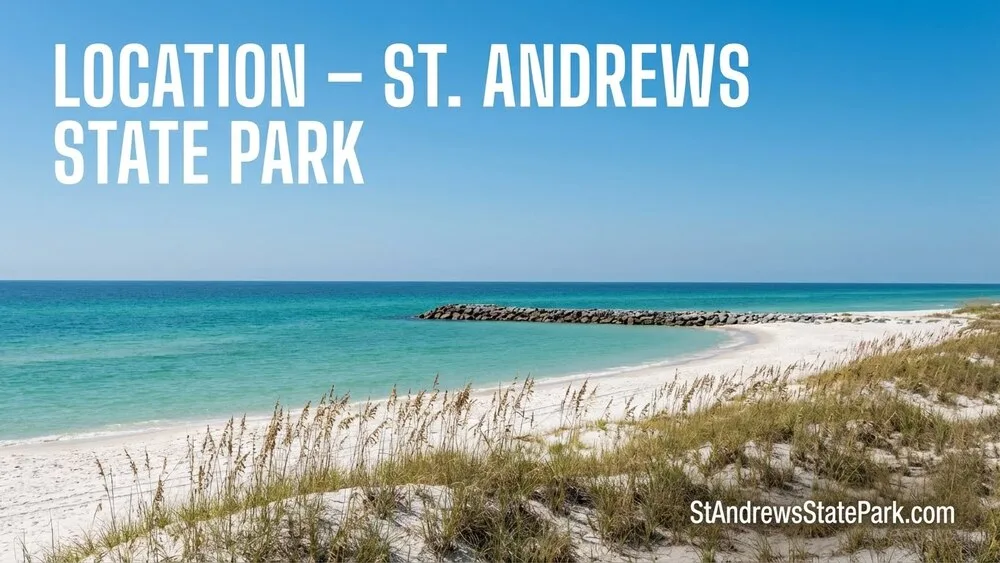
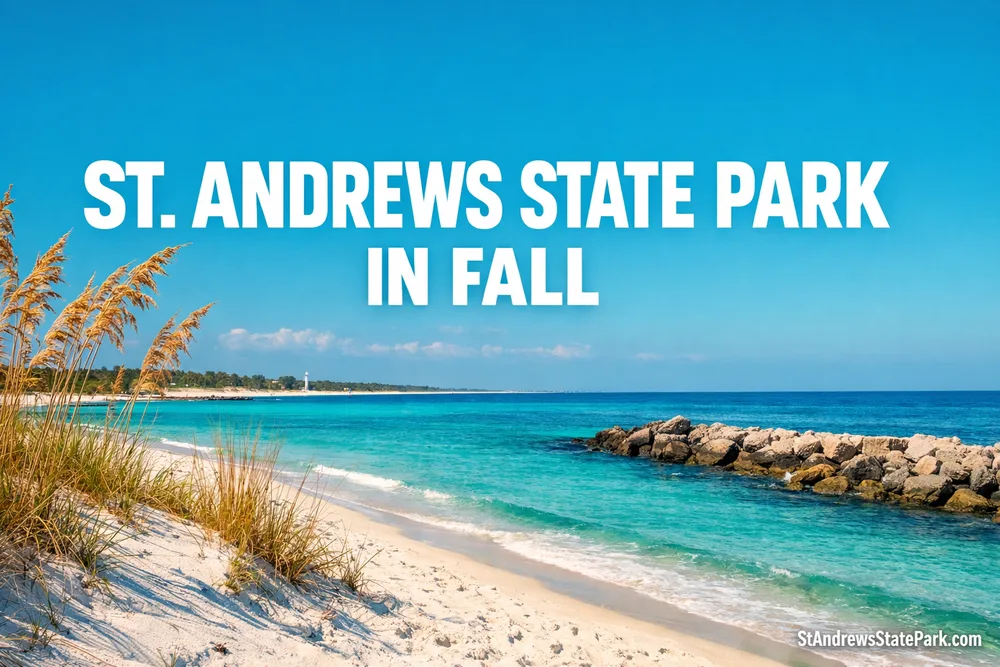
This is the park’s headline shoreline: sugar-white sand, a wide Gulf view, and the jetties that create a dramatic edge where water and stone meet. In fall, you’ll often see people spreading out naturally—less “packed towel to towel,” more choose-your-own-space.
- Long, straight shoreline for walking and shell spotting
- Rock jetty structure that draws marine life and snorkelers
- Open Gulf feel that changes hour by hour with light and tide
Grand Lagoon Side
The lagoon side is the park’s calmer personality. You still get beautiful sand and water, but with a more sheltered feel—great for slower days, family time, and watching boats move through the pass from a comfortable distance. In fall, that protected water can feel like a natural “outdoor lounge,” especially on breezier days.
- Boat ramp and fishing pier on the lagoon
- Easy access to paddling routes and calmer water time
- Great viewing angles for birds over marsh and shoreline
If you only have one fall afternoon, spend part of it near the jetties. The water there can shift from glassy to lively in minutes, like a living weather report. It’s one of the easiest places to see how the Gulf behaves without needing a boat.
Snorkeling At The Jetties In Fall
The rock jetty here isn’t just scenery—it’s also an artificial reef habitat. Built to protect a shipping channel, those rocks now hold sponges, small corals, and a steady stream of sea life. The most beginner-friendly area is usually the landward (lagoon) side, where conditions can feel more protected than the open Gulf. Still, tides matter. Near the pass, water can move with purpose, like a slow conveyor belt.
- Common sightings include schools of small reef fish and larger visitors like rays and sheepshead.
- Dolphins are frequent in the area, and seeing them from shore can be a real highlight.
- Snorkeling comfort in fall often comes down to wind, tide, and visibility, so reading posted conditions is part of the experience.
A small detail that makes a big difference: in fall, the sun angle is lower, so the water color can look deeper and more emerald at certain times. It’s the same beach, the same sand—just a different kind of light. That’s why the season feels new even if you’ve been here before.
Shell Island And Fall’s Quieter Side
Just offshore sits Shell Island, the undeveloped barrier island edge of the park that so many people picture when they think “Florida Panhandle natural beach.” In peak season, boat and shuttle options are common; in fall, service can be more seasonal, which often means fewer people once you arrive. The vibe is simple: sand, water, dunes, sky.
- No built-up town feel—it’s intentionally natural and mostly undeveloped.
- Expect limited facilities, so most visitors carry their own water and food.
- Shelling and shoreline walks are the main event, with snorkeling possible when conditions cooperate.
Trails And Habitats In Autumn
St. Andrews isn’t only a beach park. It’s a compact sampler of coastal ecosystems—dunes, marsh, scrub, and pine flatwoods—and fall is when those habitats feel easiest to explore on foot. The park has two short nature trails (each roughly half a mile), which makes them approachable even if you’re “not a hiking person.”
Heron Pond Trail
This loop moves through flatwood pine forest and edges toward Sandy Point, where the landscape starts to feel more coastal. In fall, bird activity can pick up around water and marshy spots, and the trail’s pace suits quiet observation more than speed.
Gator Lake Trail
Short, scenic, and memorable. You get a lakeside view and a feel for the park’s scrub and upland sand. Fall light across the lake can be surprisingly dramatic, like the water is holding a mirror to the sky.
Fishing, Boating, And Calm-Water Time
The park is well set up for people who want to be on the water, not just next to it. A fishing pier and boat ramp sit on the Grand Lagoon, and there’s a concession area that can carry basics like snacks, souvenirs, bait, and (seasonally) rentals for chairs, umbrellas, snorkeling gear, canoes, and kayaks. For anglers, a valid Florida saltwater fishing license is required, and all fishing follows state rules on size, seasons, and limits.
| Where | What It Feels Like | Why Fall Is Pleasant Here |
|---|---|---|
| Jetty Rocks | Dynamic water, strong “edge of the pass” energy | Comfortable air makes longer sessions easier |
| Grand Lagoon Pier | More sheltered, steadier conditions | Less heat stress for slow, patient fishing |
| Lagoon Paddling Routes | Quiet water exploration | Lower humidity makes paddling feel lighter |
Park Hours, Fees, And Helpful Rules
St. Andrews State Park is open 8 a.m. until sundown, 365 days a year. Standard entry is $8 per vehicle (two to eight people), $4 for a single-occupant vehicle, and $2 for pedestrians or bicyclists. Pets are welcome in the campground, yet they are not permitted in swimming areas or park buildings—one of those rules that keeps the experience comfortable for everyone.
Fall days can look calm while the pass is still moving water underneath. Near the jetties, tides shape conditions. Staying within designated areas and following posted guidance keeps the experience easy and enjoyable—the way it should be.
Common Fall Questions
Is the water warm enough to swim in October?
Most years, yes. October sea temperatures are often in the high 70s °F (mid-20s °C). It can feel like “late summer water” on warm days, especially earlier in the month. Wind and cloud cover can change comfort quickly, so the same week can offer different swim days.
Does fall change the snorkeling experience at the jetties?
Fall can be great for snorkeling because the air is more comfortable, and the jetty structure continues to hold marine life. The key variables are wind, tide, and visibility. Many visitors prefer the protected side first, then decide if conditions suit more open water.
Are the trails worth it if I mainly came for the beach?
Absolutely. The two short nature trails add context to everything you see on the sand. When you walk through pine flatwoods and scrub, the beach stops feeling like a single scene and starts feeling like a whole coastal system. In fall, that walk is simply more comfortable.
What makes fall feel different from summer here?
It’s the combination: less humidity, fewer peak-season crowds, and water that often stays inviting through early and mid-fall. The park’s variety—Gulf beach, lagoon shoreline, jetties, and trails—feels easier to enjoy in one visit when the day isn’t dominated by midday heat.