St. Andrews State Park doesn’t feel the same every time you visit. Some mornings it’s quiet and glassy, like the Gulf is holding its breath. Other days it’s lively, with that bright, beach-day energy that makes you want to stay until the last bit of sun fades. If you’re deciding on the best time to visit St. Andrews State Park, the “right” answer depends on what you want to feel when you step onto the sand.
Park Hours And Entry Details
The park is open 8 a.m. to sundown, 365 days a year. That single detail shapes your timing more than you’d think—especially if you love sunsets and want to squeeze in a walk after the beach.
Day-use entry is $8 per vehicle (two to eight people) or $4 for a single-occupant vehicle. Walk-ins and cyclists are $2. Keeping these numbers in mind helps you plan short visits and full-day beach days without surprises.
| Season | What It Feels Like | Beach And Water Mood | How Busy It Usually Gets | Great For |
|---|---|---|---|---|
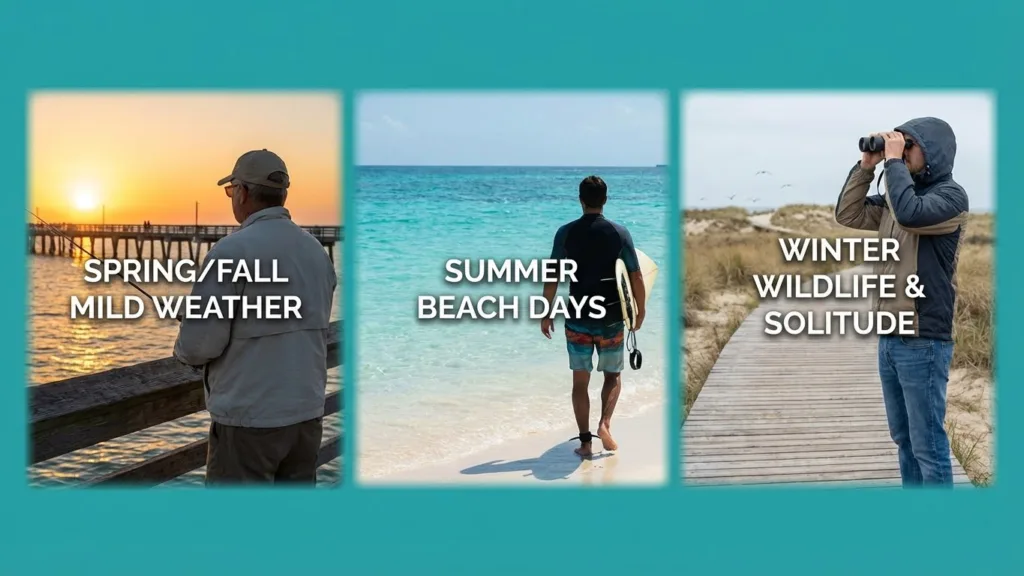
| Spring (Mar–May) | Comfortable air, bright days | Water starts warming; clearer “beach weather” arrives fast | Ranges from calm weekdays to very busy peak weeks | Walking trails, snorkel days, family beach time |
| Summer (Jun–Aug) | Hot, humid, long daylight | Warm water, classic Gulf summer vibe | Peak crowds, especially weekends and holidays | Swimming, paddling, all-day beach days |
| Early Fall (Sep–Oct) | Warm but easing | Water often still warm; beach days stay strong | Often lighter than midsummer | Balanced visits: beach + trails in one day |
| Late Fall (Nov) | Mild, crisp mornings | Water cools; shoreline feels open | Usually calmer | Nature walks, photography, quiet camping vibes |
| Winter (Dec–Feb) | Cooler air, clear days | Water is cool; beach is peaceful | Often the quietest stretch | Crowd-free beaches, birdwatching, relaxed exploring |
Weather Patterns That Shape The Best Visit
St. Andrews State Park sits in Panama City Beach on Florida’s Emerald Coast, so the year has a clear rhythm: mild winters, warm springs, hot summers, and a long shoulder season that can feel like a gift. In Panama City Beach, July averages around 89°F for the daily high and 77°F for the low, while January averages around 63°F for the high and 48°F for the low. If you prefer comfortable walking weather, spring and fall often hit the sweet spot.
If you’re choosing the best time to visit St. Andrews State Park for a “do everything” day—beach, trails, maybe a bit of exploring—early April to mid-May and early October to early November are often the easiest windows to enjoy without feeling rushed by heat.
Spring Visits
Spring is when the park starts showing off. The air is comfortable, the dunes look sharp in the light, and you can bounce between sand and trail without feeling drained. It’s also a season with big mood swings in crowd levels—some weeks feel relaxed, then a busy stretch arrives and the energy changes fast. If you want a calmer spring experience, weekday mornings can feel like you’ve found a quieter version of the same park.
- March can be lively around popular vacation weeks; arrive early if you want a smoother start.
- April often brings that “comfortable all day” feeling—beach time and trail time fit together naturally.
- May leans warmer, and the water is noticeably more inviting for swimming.
If you’re the kind of visitor who likes nature details, spring also makes the Gator Lake area feel extra rewarding. The interpretive trail is an easy walk, and it’s known for views across coastal scrub and patches of Florida rosemary scrub. Bring your curiosity more than your speed; it’s the kind of place where slowing down pays off.
Summer Visits
Summer is peak beach season, and it earns that reputation. The water is warm, daylight lasts, and the park can feel like a festival of simple pleasures: towels on sand, kids laughing, snorkel masks flashing in the sun. It’s also the busiest time, so the time of day matters more in summer than any other season. Want the beach to feel spacious? Be there at 8 a.m. when the gates open.
What Summer Is Best For
- Long swim days with classic Gulf warmth
- snorkeling when conditions are calm near the jetty
- Paddling in the park’s protected waters
Nature Notes In Summer
Along the Florida Panhandle, sea turtle nesting season is officially May 1 to October 31. That means summer visits sometimes come with a special kind of excitement: you may hear about nesting activity, and you’ll see why the dunes and beach rules matter. It’s a good moment to be a respectful beach guest—enjoy the shoreline, and let wildlife keep its space.
Fall Visits
Fall is the season locals tend to smile about. The heat starts easing, the park feels more breathable, and the shoreline can feel wide again. Early fall often keeps a lot of the summer water appeal, while the air becomes easier for exploring. If you want a visit that blends beach time and trail time without feeling like you need a recovery nap afterward, fall is a strong contender.
- September: still warm, often less intense than midsummer.
- October: a favorite for comfortable afternoons and unhurried walks.
- November: cooler mornings, quieter shoreline, and a calmer pace across the park.
Fall also lines up nicely with bird activity along the coast. St. Andrews State Park is part of a birding network and is known for variety—so if your idea of a perfect moment is spotting movement in the pines and hearing calls near the water, spring and fall tend to feel most alive.
Winter Visits
Winter visits feel like the park has turned the volume down—in a good way. The beach is often peaceful, the light is clean, and it’s easier to notice the small details: patterned sand, wind in the sea oats, long lines of shorebirds. The tradeoff is simple: the water is cool, and beach time becomes more about walking than swimming. If your goal is space, winter can deliver it beautifully.
Why Winter Can Be A Smart Choice
- Comfortable temperatures for trail walks and exploring dunes
- A calmer atmosphere for photography and birdwatching
- More “slow travel” energy—less rushing, more noticing
Crowds And The Feel Of The Park
Crowds don’t just change parking—they change the vibe. On busy days, St. Andrews State Park feels like a shared celebration of beach life. On quieter days, it feels like a private retreat you somehow lucked into. If your schedule is flexible, weekdays usually offer a smoother experience than weekends, and mornings are almost always calmer than mid-afternoon. Holiday weekends and the heart of summer naturally bring more people, so the earlier you arrive, the more choice you have in where you settle.
Time Of Day: Small Timing, Big Difference
If you remember one timing detail, make it this: the park opens at 8 a.m. and closes at sundown. That means the “golden hour” is real here—but you’ll want to plan so you’re already where you want to be as the light starts turning warm. Morning visits often feel cooler and more open, while afternoon visits feel more social and beach-forward. It’s like choosing between a quiet coffee and a lively brunch—same place, totally different mood.
Morning
Lower crowds, cooler air, and a more relaxed start. If you want the best time to visit St. Andrews State Park for easy parking and a calmer shoreline, morning is the simplest answer.
Afternoon
More energy, more beach setups, more families arriving for the day. If your goal is a classic beach atmosphere, afternoons deliver that summer postcard feel.
Late Day
Warm light, long shadows on the dunes, and an easy pace before the gates close at sundown. It’s a great time for a short walk and a quiet moment on the sand—just keep the closing time in mind.
Picking A Season By What You Love Doing
Snorkeling Near The Jetty
The park’s rock jetty is famous for snorkeling because it functions like an artificial reef and can hold a surprising amount of marine life. When conditions are calm, snorkelers may spot rays, angelfish, and other reef residents. If snorkeling is your priority, late spring through early fall often gives you the warmest, most inviting water, and morning is usually the most comfortable time to start.
Trails And Wildlife
If you love the “park” part of the park, spring and fall often feel best. The Gator Lake interpretive trail is an easy walk with views across scrub and coastal habitat, and the lake area is known for spotting waterbirds and other small wildlife. On cooler days, you can linger longer and notice more.
Shell Island Time
Shell Island is only accessible by boat, and ferry/shuttle options operate through authorized providers. If you’re planning to pair St. Andrews State Park with Shell Island, the most comfortable seasons are usually when you can handle both sun and walking without fatigue—many visitors find that spring and fall balance that nicely.
So, When Should You Go?
If you want the simplest answer, it’s this: spring and fall are often the most comfortable seasons for an all-around visit, while summer is unbeatable for that classic warm-water beach day. Winter is the quiet favorite—less about swimming, more about space, light, and a slower pace. The good part? St. Andrews State Park doesn’t have a bad season. It just has different versions of itself, waiting for the moment that matches what you’re looking for.