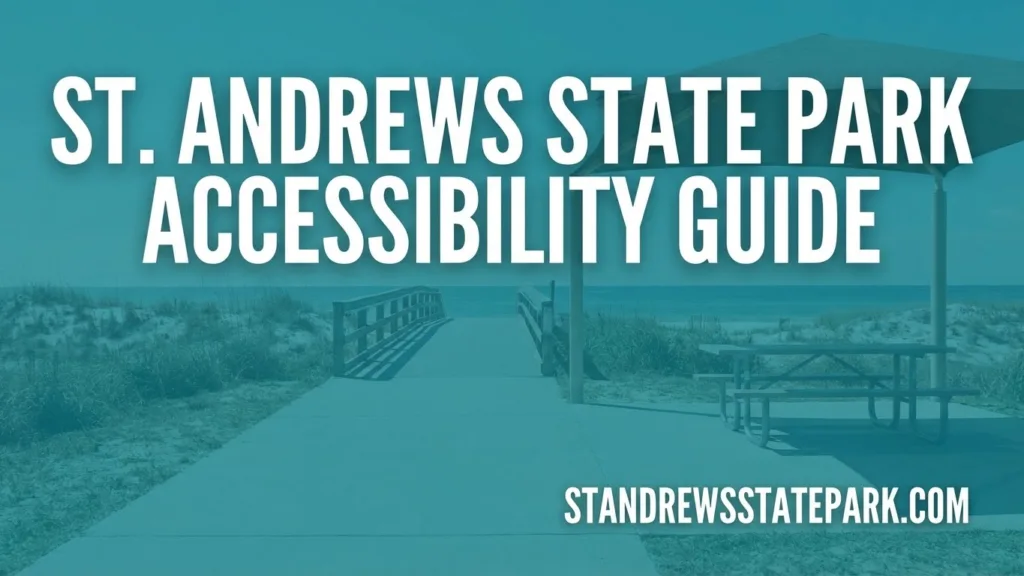
St. Andrews State Park accessibility is one of those things you notice the moment you arrive: paved walkways, elevated boardwalk access, and easy-to-find facilities that help you focus on the fun part—the beach, the lagoon, and the open views. If you’re looking for a wheelchair-friendly Florida state park experience that still feels wild and coastal, this guide walks you through what’s here, what’s smooth, and what needs a quick check with staff.
Think of the park like a well-marked shoreline “map” in real life: Gulf-side sand on one side, Grand Lagoon on the other, and key access points in between. The goal is simple—help you spend more time enjoying the day and less time guessing where the easiest route is.
Getting Around The Park
Much of the day-use area is set up for comfortable movement, with concrete sidewalks and ramps at key spots. You’ll also find accessible restrooms in multiple areas, which matters more than people realize on a long beach day. One small detail worth knowing: some exterior doors are not automatic, so a little extra push may be part of the routine.
Good to know: coastal parks shift with tides and seasonal setups. If you want the most comfortable route to the water, staff can point you toward the best access point for that day’s conditions and let you know about beach wheelchair availability.
Parking and Arrival
Arriving smoothly sets the tone. The park has marked accessible parking near major activity zones, so you can choose your “home base” based on what you want most—lagoon views, pier access, or beach boardwalks. Several lots are specifically noted for having designated accessible spaces.
- Camp Store area: a paved lot with one designated accessible space listed for that lot.
- Gator Lake area: a gravel lot with one designated accessible space listed for that lot.
- Jetty Store area: a paved lot with three designated accessible spaces listed for that lot.
- Pier area: a paved lot with three designated accessible spaces listed for that lot.
| Area | What Feels Accessible | What To Know |
|---|---|---|
| Beach Access Points | Elevated boardwalk routes and ramped approaches in key spots | Loose sand changes daily; ask about beach wheelchairs if you want shoreline access |
| Public Facilities | Accessible restrooms across the property | Some exterior doors aren’t automatic |
| Nature Trails | Benches along routes for rest stops | Trails are not suited to standard wheelchairs; paved paths elsewhere stay easier |
| Fishing and Viewing | Pier-area access with nearby facilities | Jetty rocks are uneven; the pier and overlooks are the most mobility-friendly options |
| Shell Island Ferry | Wheelchairs can be accommodated on the boat | Motorized scooters can ride the ferry, yet are not permitted on Shell Island beaches |
Beach Access and Shoreline Routes
St. Andrews is famous for its beautiful shoreline—and it’s also known for offering accessible amenities like elevated boardwalks to the beach plus beach wheelchair options. Want a simple way to picture it? The boardwalk is your “bridge,” and the beach wheelchair is your “all-terrain key” when sand gets soft.
Gulf-Side Beach
If your goal is open-water views and that classic shoreline feel, the Gulf-side access points are the focus. Look for boardwalk approaches and ask on arrival about the most comfortable route to a firm stopping point near the sand.
Grand Lagoon Side
The lagoon side often feels calmer and can be a great choice for steady-paced exploring. You’re closer to pier access, boat activity, and services that can make the day smoother.
Beach wheelchairs are available upon request in the park area, and on-site rental services describe options that can include motorized and even floating models, typically at no charge with an ID held during use. Availability can vary, so it’s smart to ask early if shoreline time is the highlight of your visit.
Restrooms and Comfort Stops
Accessible trips get easier when the basics are easy. The park is described as having accessible restrooms throughout, plus convenient facilities near major activity zones. Around the pier area, you can typically find restroom access and outdoor rinse showers, which is a simple comfort upgrade after sand, salt air, and sun.
- Best strategy: choose your main area first (beach, lagoon, pier), then keep restroom locations in mind as your “anchors.”
- Food and seating: walk-up concessions are described as wheelchair accessible, including the service area and nearby seating.
Trails and Nature Viewing
St. Andrews has a mix of “roll-friendly” and “nature-first” paths. Concrete sidewalks are common in public areas, so accessible strolling is absolutely part of the experience. The two short nature trails are each described as roughly half a mile with benches along the way, yet they’re also described as not accessible with standard wheelchairs. If you love wildlife viewing, the paved areas can still deliver that coastal-park feeling without the rough terrain.
- Benches: helpful pause points when you want to enjoy birds and coastal scenery at an easy pace.
- Surface check: if a path shifts from concrete to sand or packed soil, it’s the moment to decide whether a beach wheelchair would help.
Fishing Piers and Scenic Overlooks
For many visitors, the easiest “big view” comes from the fishing piers and overlooks. St. Andrews is widely described as having fishing piers, including a pier associated with the Grand Lagoon side. If you want that feeling of being “over the water” without dealing with soft sand, the pier area can be a great choice.
One more detail that matters for accessibility planning: a dock in the area is described as a fixed dock with no railings. If you prefer a firm handhold, you may enjoy the park’s boardwalks, overlooks, and pier routes most.
Shell Island Ferry and Boat Access
Shell Island is part of what makes this park feel like a two-in-one adventure. The ferry ride is described as about 15 minutes, and the boat is described as able to accommodate wheelchairs and motorized scooters. There’s one important boundary to know: motorized scooters are not permitted on Shell Island beaches, so mobility planning on the island itself may look different from mobility planning in the park.
Boarding note: the ferry operation is described as using stairs during high tide to help with boarding. If you’d like hands-on assistance, staff are described as available to help guests board and disembark for certain rentals and boat activities.
If you’re considering rentals on the water, the operation is described as having no ADA-specific launch, while also having team members who can assist with getting on and off. It’s a “tell us what you need” setup—direct, practical, and usually the fastest way to make the experience comfortable.
Camping and Overnight Options
Overnight stays can be part of an accessible visit too. The park is commonly described as offering a campground and accessible campsites, plus accessible facilities in day-use areas. If you prefer something more “ready to go” than a traditional campsite, on-site lodging described as eco-tents includes accessibility features like ground-level placement and a movable ramp for entry.
Campground Access
For the campground, look for accessible sites and nearby accessible restrooms. If you use a mobility device, choosing a site closer to paved routes can make mornings and evenings feel easy instead of rushed.
Eco-Tent Lodging Access
Eco-tents are described as having a zippered entry rather than a standard door, with the opening adjustable for wheelchairs. Showers are described as roll-in accessible with grab bars in the shower and near toilets, plus automated lighting for ease of use.
Service Animals and Mobility Devices
Florida state parks generally welcome service animals, and mobility aids like wheelchairs are allowed anywhere foot traffic is allowed. If you use a powered mobility device, the key idea is simple: it’s about safe access and respectful shared space. When you arrive, staff can point you toward the widest paths and the smoothest routes to the places you’re most excited to see.
- Service animals: welcomed as part of an accessible visit, with clear routes in public areas.
- Mobility aids: the park’s sidewalk network supports everyday movement between major zones.
- Beach mobility: when sand is the barrier, beach wheelchair access is the tool that can turn “maybe” into “yes.”
Questions To Ask On Arrival
If you want the day to feel smooth from the first step, asking a few direct questions can save a lot of backtracking. It’s not about “special requests”—it’s about getting the most accessible experience the park can offer that day.
- Which access point has the easiest boardwalk route to the area I want today?
- Are beach wheelchairs available right now, and where is pickup and return?
- If I’m taking the ferry, what’s the boarding setup at the moment—ramp, dock, or high-tide stairs?
- Which area has the closest accessible restroom to my main activity zone?
- Is there a recommended smooth-surface route to the pier or main overlooks from accessible parking?