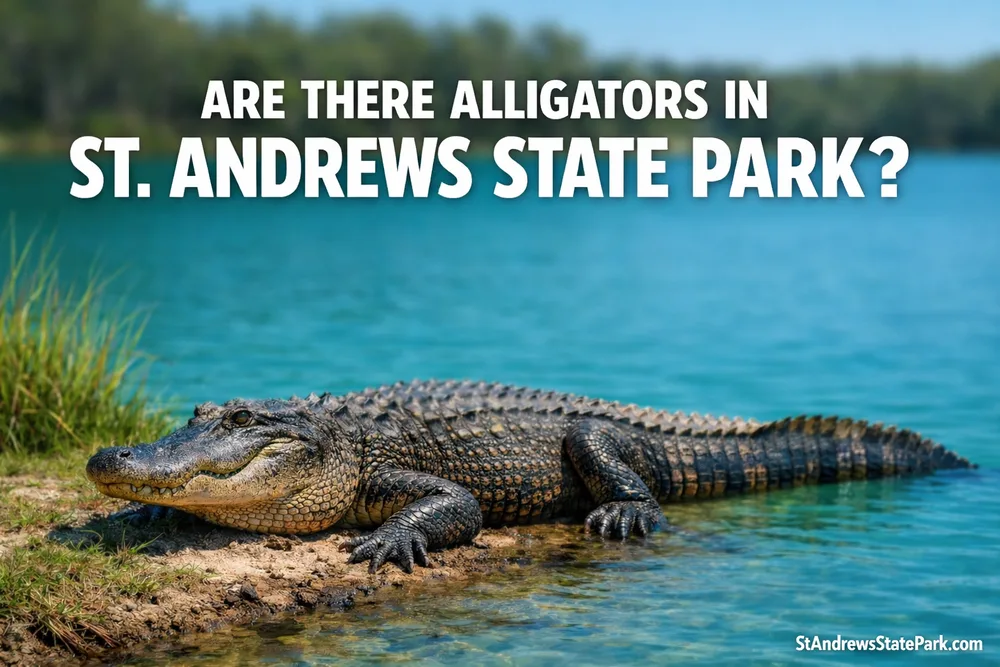
Yes—you can see alligators in St. Andrews State Park, and the main place they naturally belong is freshwater. The park’s most well-known alligator habitat is Gator Lake, a calm inland lake where American alligators are part of the ecosystem. So the real question is: where should you look, and what should you do if you spot one?
🐊 A Calm Note Before You Go
Alligators are a normal part of Florida wildlife. St. Andrews State Park is set up so you can enjoy nature from safe viewing areas. Keep it simple: give them space, stay on marked trails, and treat every shoreline like a look-only zone. Also important: feeding or enticing wild alligators is illegal in Florida.
- 👀 Keep a safe distance from any alligator, even if it looks still.
- 🧭 Watch from firm ground or designated viewpoints.
- 🏖️ Swim only in designated areas during daylight.
- 🐾 Keep pets leashed and away from the water’s edge.
Where Alligators Are Usually Seen
If you want a location-based answer, start with Gator Lake. It’s a freshwater lake inside the park that is widely known for alligator sightings. You may see one basking near the shoreline, drifting like a dark log, or sliding under the surface so quietly it feels like the water just blinked.
Outside of the lake, think in habitats, not headlines. Alligators prefer calm water with cover and food—pond edges, marshy pockets, and protected shoreline zones. St. Andrews is a coastal park, but it also includes inland freshwater areas. That’s why sightings are much more likely near quiet water than on the open Gulf beach.
📍 Park Areas And What They Mean For Sightings
| Area | Water Type | What You Might Notice | Best Way To Observe |
|---|---|---|---|
| Gator Lake | Freshwater | Basking, slow gliding, still silhouettes near plants | Use viewpoints; scan shoreline edges calmly |
| Gator Lake Trail | Freshwater nearby | Short trail with clear lines of sight to the water | Stay on the marked path; don’t approach the bank |
| Heron Pond Area | Freshwater | Bird activity, still water, quiet corners | Walk slowly; stop often; look for motionless shapes |
| Marshy Edges | Fresh to brackish | Vegetation lines and shallow zones | Observe from stable ground; keep extra distance |
Why A Coastal Park Still Has Alligators
St. Andrews feels like a beach park, yet it also holds pockets of freshwater habitat. That matters because alligators are built for calm inland water. In the park, Gator Lake is a reliable example: it provides still water, vegetation edges, and a natural food web. You get the best of both worlds—Gulf views and wildlife-friendly freshwater—without needing a long hike.
This mix of ecosystems is why sightings can feel surprising but make perfect sense. You may hear waves in the distance while standing near a quiet lake that supports birds, turtles, and other wildlife. It’s a reminder that Florida landscapes often overlap: beach energy on one side, wetland calm on the other.
🌿 Why Gator Lake Works For Alligators
- Still water that stays calmer than open surf
- Vegetation edges that offer cover
- A food web with fish and turtles—nature’s everyday menu
- Trails and viewpoints that support safe wildlife watching
Alligators And Saltwater In This Park
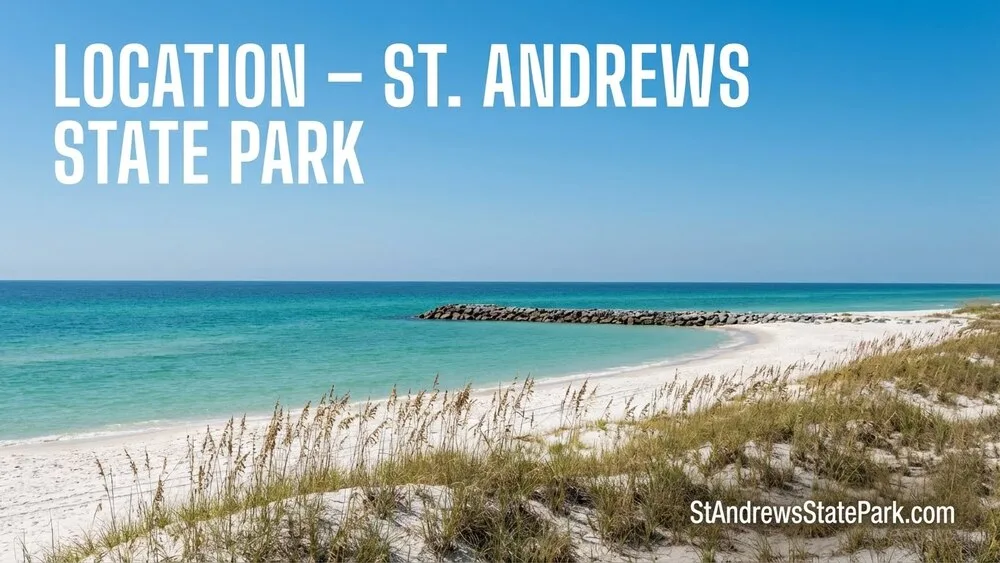
Alligators are primarily freshwater animals. They can tolerate brackish water for limited periods, which matters near coastal lagoons. Still, the open Gulf shoreline is not their typical home. So if your main plan is beach time, your odds of seeing an alligator on the sand are low compared to inland freshwater areas.
If someone says “Florida means gators everywhere,” it sounds dramatic—but the more accurate idea is freshwater equals gators. In St. Andrews, that difference is useful: the beach is for swimming and shoreline views, while Gator Lake is your most realistic place for an alligator sighting.
What You’re Seeing When You Spot One
When an alligator is resting, it can look like a piece of driftwood that decided to breathe. The eyes and nostrils sit high, the body stays low, and it can remain still for a long time. That stillness is part of why people miss them at first. Your best move is simple: stop, scan the shoreline, and let your eyes adjust.
Look for small clues that don’t require you to step closer: a smooth V-shaped wake, a gentle swirl near plants, or a dark back breaking the surface for a second. Wildlife watching here is not about chasing a sighting. It’s about quiet observation—the kind that makes the park feel alive.
Wildlife Rules That Keep Everyone Comfortable
When visitors keep small habits consistent, the park stays peaceful. The basics are straightforward: keep a safe distance, never feed wildlife, and enjoy the water only in designated swim areas during daylight. It’s not about fear—it’s about respecting a wild animal’s space so it stays naturally wild.
- 🐊 If you see an alligator, step back and keep a comfortable distance.
- 🍽️ Never feed or throw food toward wildlife.
- 🏖️ Choose designated swim zones and keep swimming to daytime.
- 🐾 Keep pets leashed and away from the shoreline.
🧩 A Simple Way To Think About It
Beach time? Focus on the Gulf. Want wildlife? Walk toward Gator Lake. Same park, different habitats. That’s the key to understanding why alligators can exist here without affecting the classic beach experience.
FAQ
Are there alligators on the main beach at St. Andrews State Park?
It’s uncommon. Alligators are mainly freshwater animals, so the open Gulf beach is not their typical habitat. Sightings are far more likely around Gator Lake.
Where is the most likely place to see an alligator in the park?
Gator Lake is the park’s best-known spot for alligator sightings. The nearby trail gives you better angles for scanning the shoreline without getting close to the water.
Do alligators live in saltwater here?
They are primarily freshwater animals. They can tolerate brackish water for short periods, but the most reliable habitat in the park is inland freshwater, especially Gator Lake.
Is feeding alligators allowed in Florida?
No. Feeding or enticing wild alligators is illegal in Florida. It also changes natural behavior and makes wildlife less predictable.
What should I do if I see an alligator while walking?
Pause, keep a comfortable distance, and stay on the trail. Avoid the shoreline edge, keep pets back, and enjoy the sighting from where you are.